4 Revenue Streams You Need to Have in Your Business
What happens when your business depends on selling the same signature offer, again and again? Diversifying revenue is not simply about creating more products; it is about building different ways for clients to buy, reducing the pressure of constantly replacing completed projects and making cash flow easier to forecast.
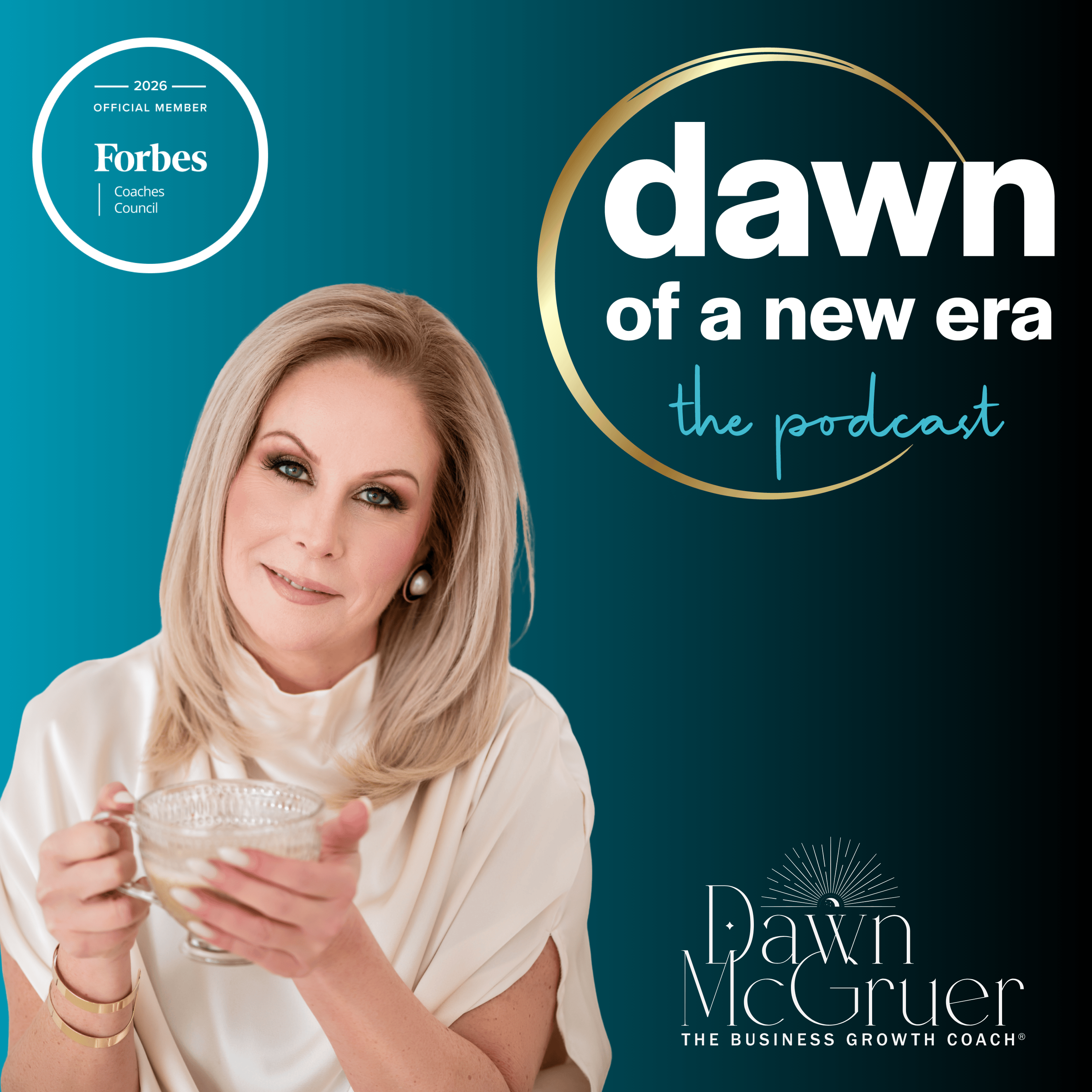
In this episode, Dawn McGruer, Business Growth Coach, explores four core revenue streams: recurring, transactional, project and service. She explains why recurring income is her priority, how passive and blended delivery can sit alongside coaching and consulting, and why every offer needs to be considered through the lens of pricing, profit and the time it requires.
For female founders scaling their businesses, particularly those caught in a feast-and-famine cycle, this is an invitation to examine the structure behind their sales. You will come away with a practical framework for reviewing your existing offers, identifying relevant upsells and cross-sells, and choosing a revenue mix that serves your clients while supporting the freedom and flexibility you want.
Listen to the Episode
Enjoying The Billionaire Brain®? Follow the show on Apple Podcasts so new episodes appear automatically.
Full Episode Transcript
Read
This transcript was created automatically and may contain small errors.
Welcome to episode 102 with myself, Dawn McGruer, the Business Growth Coach, helping CEOs to scale and grow. In this episode, we're going to look at the four revenue streams that you absolutely need in your business. We hear this a lot about, oh, you've got to have multiple revenue streams, you've got to diversify your income. But what does that actually mean?
Now, I'm going to break it down. I'm going to give you the four core revenue streams that you need to implement in your business. Often when I meet clients, one of the biggest struggles is selling the one thing that they have, the signature offer, again and again and again and again. What we're looking to do is kind of break that up so that we have other opportunities to sell.
We all know that obviously the more avenues we have of income coming in and the more diverse our income is, if we have multiple revenue streams, that means that we've got more chances of making more money. So what are the four core revenue streams? The first one you're probably most familiar with, and it's to do with the fastest way of scaling any business. Recurring revenue is absolutely one of my favourite types of revenue.
Why? Because it takes the same effort to recruit a client who pays you once. As it does for a recurring revenue client. Now sit with that for a second, because if you look at the fact that maybe you do a call with a new client, they've inquired about your products and services, and you sell a project-based or a one-off item to them, it means that you'd either have to go back to them to try and upsell at the end of whatever project or service you're offering and try and get them to buy again.
Or if you think about it in terms of the amount of clients you would have, you would need double the amount of clients because every time somebody finishes, you need a new one. So every one client you take off, you have to think about who their replacement will be. So recurring revenue for me. is a really solid way of building a great business that is going to scale and grow with ease, and it's also going to get over that feast and famine that we see a lot in businesses.
I suffered from this when I first started up my marketing agency at 21. I'm 44 now, and it was tough because I was getting clients, but then I was spending time working with the client and then thinking, well, the project's coming to an end, I have to find another. And I was constantly up and down, up and down, and this puts pressure on the finances in the business. And if you're looking to grow a sustainable, profitable business that's successful, I would absolutely encourage looking at getting a recurring model within your business so that for each and every month, they're paying some form of retainer.
This means that you can forecast your cash flow. You're walking into each and every month knowing exactly how much you've earned before even doing anything. This is definitely the easiest way to run a business. The second thing is transaction.
This is the most common one because this refers to the stream of revenue for your business, so it's the primary source of revenue. It's the one thing that you probably are focused on each and every day. Now, if you only have this, it does become more challenging to increase the amount of money you're making because there's a certain amount of effort, time and money that goes into marketing those transactional incomes, okay? So the transactional revenue stream, if you're putting effort into social media, email marketing, all of these different things to get your sales system running, there comes a point that obviously you have to scale and then invest more to get more back, and so on and so on.
If you encourage You and your other team members to look at ways that you could have not just recurring and your normal transaction, but maybe adding three and four, which is project and service revenues. Project revenue is if you were to do a specific thing. So it could be a launch of an online course. It could be a specific project around creating content or designing something that has a one-off fee, which is fine.
These could be slightly higher ticket, which they just add a nice chunk of cash flow into the business. And then number four, which is service. This is around your consulting or your coaching within the business. So you imagine that you have multiple different things.
It means that you will be appealing to a broader audience within your niche, depending on what it is they want. Across all of my businesses, I have multiple revenue streams. And the great thing is, is some of them are passive, which is maybe an online course. Some are blended, whereby they have an online course and some live coaching and mentoring.
Then we have done with you. So we are showing up on a call, doing the work with the client, and then that's it, once and done. And that might run over a period of weeks, or it could be ongoing. Then you have done for you services, and done for you services are where you pick up the actual service and implement it yourself.
I've never had a done for you service. It's never been in my model. I've always done done with you. Either passive or blended.
If you think about how your business model is constructed, passive is great because it means that if somebody buys your online course, you do not have to part with your time when they part with their money. They can access the course, they can complete the course and enjoy it and implement all of the actions and things you share with them, but you don't have to be there. Again, if you're looking at things like your service-based, if you're working one-to-one, which is absolutely fine. So many people out there are saying, don't do one-to-one, do one-to-many.
But what you can do is you can blend some of it so that you can have some online interaction, one-to-one or face-to-face. But what's stopping you also having programs, group programs, where you do online and face-to-face with them? This is often the best way to try and incorporate the things that you like doing within your business. Have a think about the different revenue streams.
Have a look at your products and services. Look at the most popular thing that you sell, and look at the ways that you can diversify your income. Are there add-ons? Are there upsells?
Are there cross-sells? At the end of the day, one of the key core objectives of any business is around increasing the customer base, average order value and purchase frequency. And if you have that in your mind's eye each and every day, then you're going to be focusing on how you can work with the client, how you can look at serving them in the best way possible, but giving them direction or add-ons or extras or VIP bonuses that will really help them accelerate their results. So get a piece of paper, jot down your four revenue streams.
So you've got recurring, transaction, project and service, and then just try and jot down what you have in each one. If you only have one revenue stream, guess what? If you add another, then you've got two. We hear a lot about people saying you need, on average, four to seven.
If you had four revenue streams, it would give you a really, really solid business that was naturally scaling and growing, assuming that whatever it is you've created has been designed around the goals and challenges of your niche target audience so that you're attracting ideal clients and you've got a good sales pipeline or sales system in the business. It means that you would have a spread of effort, money, and time. And a lot of people who are entrepreneurs love the variety, and this is one of the things I think has driven me and motivated me. And from a mindset point of view, we need to feel in flow.
I can't feel tied to something. I need that element of freedom. I don't like to do the same thing over and over again. So for me, having these multiple revenue streams fits because each day is different.
It brings this different experience to my week, and no week is the same. So think about what lights you up and what brings you joy. Chart out your four revenue streams and perhaps look at opportunities and ways of either increasing your customer base, average order value or purchase frequency, adding some immediate upsells, cross-sells, just to work with your current clients and see how you can really maximize those relationships. Could you perhaps introduce a referral system so that your current clients could refer people to...
You pay a commission and you get new clients. So there's lots of opportunities to be had, but each business is different, and you need to design your recurring revenue streams based on what's working for you, who your current clients are, and what your earning aspirations are for the business. Because it is quite easy to triple your revenue in as little as 90 days. Yes, 90 days, if you get the right mix.
Certainly the biggest one, the priority that I would encourage all of you to implement if you haven't already, is recurring. And as I say, this results in the fastest growth ever. In my last business, I scaled to seven figures in seven months using recurring revenue model. And this just goes to show that once you get that in place, whatever your goal is for income, and you take a lot of the cash flow and feast and famine pressure away, and it frees your time up for being more creative, having more freedom and flexibility to work on different projects that you want.
All of this does come down to pricing and profit. So one word of warning: when you are designing your revenue streams and your products and services, think about how much time it takes from you, how much money and effort will it take to market, and how many clients do you need. Obviously, if you're selling higher ticket, you'll need less clients, so there's less effort involved. And if you're selling recurring, then you don't have to have lots of clients because you know that that client's going to pay you every single month for the next six, 12, 24 months, or however long you're going to be working with them.
So let me know how you get on. Let's see how your businesses change and evolve, and I hope you enjoy the podcast. If you do, please head on over to your favorite podcast player and just give us a rate and a review so we can reach more people and help more CEOs to scale and grow. So have an amazing week, and I will speak to you on the next podcast.
Thank you for listening to Dawn of a New Era podcast, and for your free checklist to find out how to boost your business for growth, profit, and success, and join our community, go to dawnmcgruer.com.
About The Billionaire Brain® Podcast
The Billionaire Brain® Podcast with Dawn McGruer, formerly Dawn of a New Era, explores the psychology, neuroscience and behaviours behind extraordinary success in business, wealth and life.
Through solo insights and conversations with founders, investors, millionaires, billionaires, authors and experts, Dawn explores how identity, thinking and behaviour shape what we create. New episodes are released regularly on Apple Podcasts, Spotify and YouTube.
- Episode · 102
- Published · 2 August 2023
- Run time · 12:39
- Host · Dawn McGruer
About Your Host
Dawn McGruer is an entrepreneur, 5× founder, award-winning keynote speaker and Forbes Books author of The Billionaire Brain®.
With more than 25 years in entrepreneurship, Dawn's work explores the intersection of founder psychology, neuroscience, wealth, identity and business growth.
Keep Listening