How to Overcome Fear In Business
What if overcoming fear in business is less about becoming fearless and more about learning how to manage uncertainty? The confidence others see rarely tells the whole story, particularly when you are stepping onto a stage, handing over responsibility or committing money to growth. The distinction is knowing when discomfort signals progress and when it is asking you to pause.
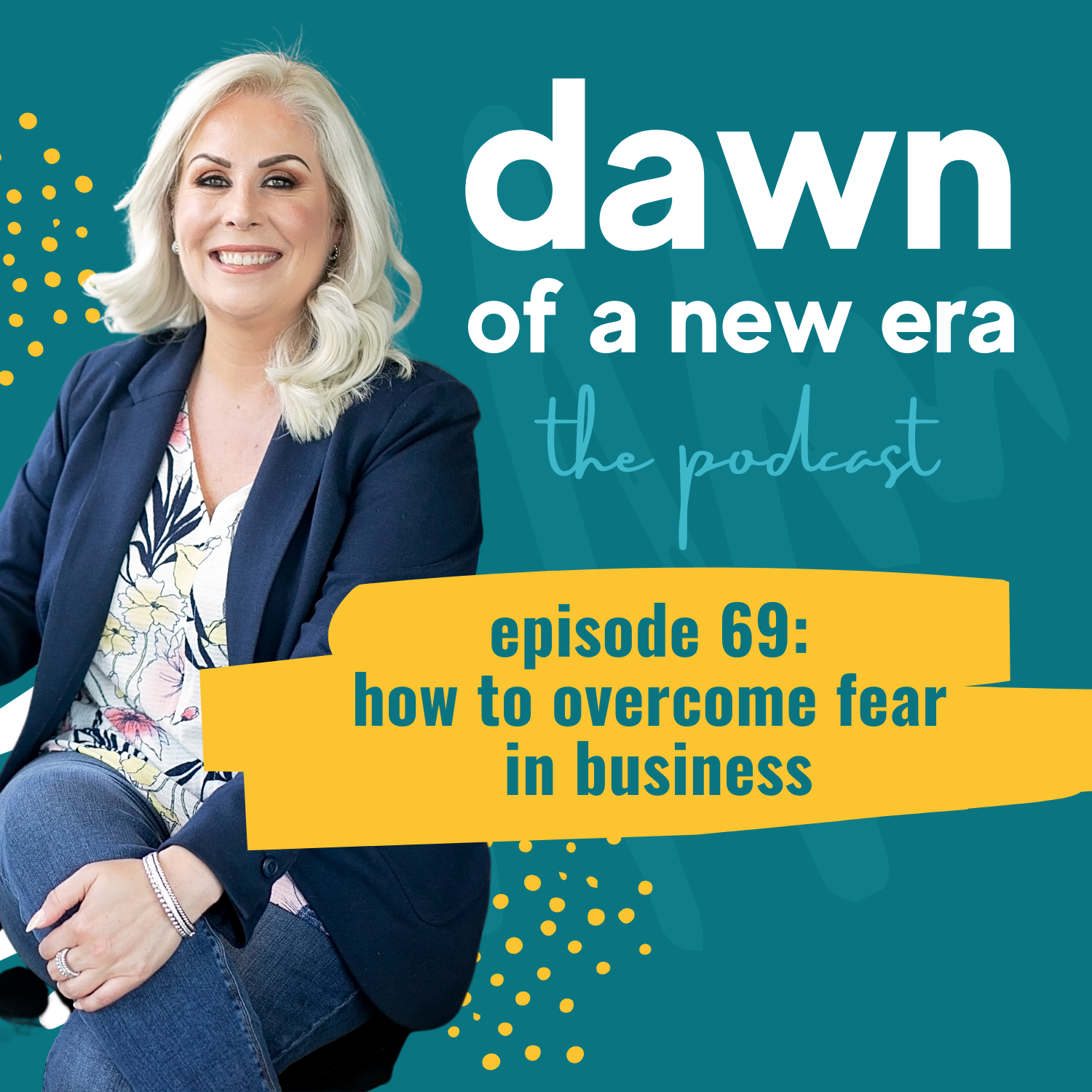
In this solo episode, Dawn McGruer, digital marketing speaker, author and trainer, shares how she manages fear through evidence, structure and realistic expectations. Drawing on her own experiences of speaking, delegation and investment, she explores how past successes can build confidence, why six core responsibilities help focus a team, and how 90-day plans make progress easier to assess.
For female founders growing a business, this is a practical listen if the need for control is making your next move feel harder than it should. You will gain a more grounded approach to growth: one that makes room for nerves while replacing vague worries with clear responsibilities, measurable goals and decisions that respect your time, energy and cash flow.
Listen to the Episode
Enjoying The Billionaire Brain®? Follow the show on Apple Podcasts so new episodes appear automatically.
Episode Highlights
Jump to a moment.
- 02:44I didn’t have faith in myself as a speaker
- 06:48I felt fear around delegation
- 08:18Have a rule of six
- 12:17I feel fear when I invest in my business or myself
- 14:16Use a spreadsheet with a 90-day plan
- 18:40Limit expectations
Full Episode Transcript
Read
This transcript was created automatically and may contain small errors.
Welcome to Dawn of a New Era, a business and marketing podcast with a difference, ranking in the top 5% globally for people who want to start, scale and grow their own business. Dawn McGruer shares tips to improve marketing, motivation and mindset, as well as her own real-life challenges and experiences as an entrepreneur. Guests include some of the world's most inspiring leaders too. So if you are an aspiring, established or serial entrepreneur, this is your go-to podcast to fast-track results and rise to meet today's challenges and master the art of online influence and business success, and avoid common pitfalls along the way.
Never miss an episode and subscribe and listen at dawnmcgruer.com. Welcome to episode 69 with myself, Dawn McGruer, digital marketing speaker, author and trainer. And in this episode, we're going to talk about how you can overcome fear.
In particular, I'm going to share a story about how I overcame fear in business because as much as in the online space, in business, you show up, people just assume that you are naturally confident. You know what you're doing. You've got your shit together and everything is fine. It's not always the case, and I think it's really interesting when people's view from the outside is very different to maybe how you feel on the inside.
So when we think about overcoming fear, I think in business this is something that I don't know whether it's actually changed for me in terms of the fear, but I think what has changed for me in particular is how I manage it because Strange enough, when I have fear in my business, it means that I am pushing forward. And one of the things that I tend to experience fear around, and it's a good fear, is when I'm doing something new, when I am pushing myself out of my comfort zone, because then I know I am growing. And what this means is, is that quite often if you look at your business and you think, I wish I could do X, Y, and Z. If only I was doing this, this, or this.
There tends to be something that you feel is holding you back, and it's something that's down to you generally that's holding you back. And in my sort of instance, it's been things like, you know. Stepping out when I was younger and thinking about speaking on stages, I mean, that just put the absolute fear into me. But I knew it was something I had to do.
And it's strange because I'd done quite a lot of public speaking, but I didn't have necessarily the faith in myself because I actually wasn't aligning myself or calling myself a speaker. So what was strange is that sometimes when you have fear, it's because you aren't holding on to that situation in the right manner. So let's look at the speaking instance. I was presenting all the time.
I was training all the time. I was talking and teaching and sharing my expertise. But was I speaking? In my head, I wasn't, but actually I was.
And then when I started to think about what speaking was for me, it was kind of like, oh, I've got to stand on a stage and I'm going to be talking about something and everyone in the audience is kind of, you know, waiting to hear from me. And what it was is that I had this fear because if people were coming to a training course or they were coming to a masterclass or something that they knew Dawn was doing X, Y and Z, she was going to be talking about this, they were going to be learning X, Y, Z. It was just clear, right? What happened with the speaking side of things is that in my head, I'd built up this instance where it was like, you're going on stage, Dawn.
You've been invited by someone to speak to an audience that doesn't necessarily know you're going to be there or why you're there to talk to them. And that was what the panic was about. It was the, what if they don't want to hear from me? What if they don't like what I say?
And you have to start getting hold of the positioning around the situation first. So when I started to think about it differently and I thought, well, I know that I am good at X, Y and Z. So I think about my genius zone. I think about instances that I just, I loved and I had positive thoughts around.
So maybe just sort of visualizing my last sort of training session where I just had fun and it felt very good from the inside. And then I would think, well, okay, if I was going to do Do this, and I was going to share this on stage. Why would that not work? You know, how could I position that or change it up slightly to work on a stage setting, to align to the goals?
So I started to get more comfortable with it because I was going back to something that I knew was proven. It was successful. It was good. It had amazing feedback, and people loved it.
So when you feel the fear about something, my advice would be just to kind of sit with the fear and think, what is it I'm scared of? Have I done anything similar to this that I can align it to? Because quite often with fear, it's kind of the unknown that we're scared of. But if you've done something before and you've got proof that it works, then it starts to kind of negate these niggling things in your head that are telling you, Oh my goodness, I've never done this before.
What if, what if, what if? If you can kind of bring that back to reality and go, Well, I've done this 900 times before, just slightly differently, and you tweak it, we kind of change our whole mindset around the situation. It becomes quite positive, and then you can kind of take control of it and kind of plan for it. Again, you know, if I was going to speak on a stage, I'd maybe go and research and see who had spoken at an event last time.
What did they talk about? How were they received? What was the feedback from other people? And I'd start to get more comfortable.
So with anything, it's having the clarity and the confidence, and you can do a lot to change it. I'm not saying that you'll always feel 100% fine. You know, when you feel the fear, especially, you know, if you speak on stage, there'll be instances you have a little bit of butterflies and nervousness, and that's kind of natural. And a lot of people still have that who speak professionally all day, every day, because it's the anticipation, you know.
So think of that as a good feeling sometimes, because I always knew myself that within a couple of seconds of just being on stage and getting into flow, all of that dissipated, and the more I could Align it to something I knew was absolutely I'd had proven results to. It just gave me that real groundedness about it. Now, the other thing is, is that when I think about my story of fear, and you may be able to relate to this, is that sometimes my fear was around giving people delegation. Here, this is an issue, giving people control of things that I just truly believed in my head that I was the only person who could do, and I could do it the best.
Now, it took me years to let go. And let's be honest, you know, in business, some of us will have slight control freak tendencies. I certainly do. But I've had to let go.
I've had to empower people to do it themselves. And you can't do everything. So what you have to think about is that if you are fearing kind of giving responsibility to others, or you're fearing things being done in the right way and, you know, you're worried about the outcome, you have to then again take the control and do this a lot within sort of supplier relationships, or if I'm thinking about team members. So even from suppliers who are external to the business and versus people who work in my businesses, I do the same thing.
And I learned this tactic in my sort of business life, and it came from the overwhelm in my head. And you may feel this in business yourself, but sometimes you have so much going on that having that control, when you give others the responsibility to do something, or you're offloading and delegating, which we absolutely should be, we start to obsess over, is it right? Is it going to be done in the way that I want it? What happens if it goes wrong?
Now, what I do is I always have a rule of six, and whenever I hire a new team member or I brief a supplier or an external agency, I always go for six things, never more. So when people start looking at job descriptions, and I see this a lot when people... For recruiting, they're saying, right, I want them to do this, this, this, and this, and this, and this. And literally, if you can't remember the list in your head, then how are you going to manage it?
So you may go for more than six, but six has always worked for me. So whoever is working for me, for instance, that could be like a PA or an ops director or someone like that, they will have six key core responsibilities. And how I manage it is that I use Trello boards. So I have all my team members, I have the six things that they manage, you know, areas of responsibility.
So I have one team, and one of their responsibilities is renewals, and I empower them to do the renewals and focus in on that and just do it to the absolute best of their ability. What it does is it focuses not only your mind, but it focuses the person who is delivering whatever they're delivering for you. And it means that they have more time and energy and space in their head because they know categorically that they could list out without having to look it up six things that they do, and they could tell you what they've done that day. Now what I do is when I go onto a call with someone, how I get over my fear of that not being done or having adverse conversations is I have my Trello board, I have the six things on there, I have notes that I've just brain dumped of everything that I've just kind of like asked them to do.
And again, it gets out of my mind, but it gives me that certainty and control so that I—
They know it has to be done, and as soon as I put it on there, I just click on the team member who has to do it, and I put an action date on, and I've offloaded it. I'm not panicking. I just feel like everything is swimming along. And since I started doing this, honestly, it's a game changer because you have someone, they've got six areas of expertise, six genius zones that they are operating in, and it just is a really happy environment to work in because no one's rushed, no one's panicked.
Yeah, you'll have deadlines sometimes that people will, you know, feel stressed about because everyone's workload has gone up. But generally, it all kind of floats along quite nicely because you're actually not putting too much on somebody. They're enjoying their work. They're actually more creative and they're better in the role because they're performing better.
Why? Because they have the time to be efficient and effective. Because they have time that they're maybe not working on things all the time for you. So you can't work people to the bone.
And this is something I see all the time. People want to get, you know, the best out of their investment, the return on the money that they're putting into that team member or the training. But you have to let people grow. You have to let people have space just as much as you do.
So do you know what? Even if they did like 80% of, you know, their role in terms of the time that you, you know, you had them working for you, let's say from eight till six, and 80% of that was them kind of working on tasks, and there was 20% where they didn't have anything. Well, does it really matter if things are being done properly if people are happy? So I think sometimes we just try and cram too much in.
I mean, I was guilty of this when I first started delegating and hiring. I was thinking, right, okay, I'm paying a salary, I need to get absolute best. I'm going to do this job description. It was so blooming complex that I had no clue really what they were doing, and nor did they.
And it was just a nightmare to manage because they were trying to learn so much. You know, if you start off with six things, you can train somebody up to do two amazingly well really quickly. And then they feel free and they just feel in control. Their confidence improves, and they start to then want to take on the next role because they're enjoying it.
They're not feeling the pressure around it. Now, the other thing, and then my last fear of fear, or my feeling of fear, is that when I invest in the business or in myself, you know, big chunks of money, I literally think about how much money I have spent on the business and myself, and I could feel quite nauseous if I actually had to write that down. But do I believe that I had to do it? A hundred percent.
Would I be where I am today without doing that? Not a chance. Because when I invest in myself, let's say I do a mastermind. So actually this week I'm heading off to LA again.
I went in December, and I'm going for about 10 days. I'm doing a three-day retreat, and the rest of it I'm spending some time kind of working on my business, doing some sightseeing, and kind of enjoying time. But what I started to understand is that I actually enjoy my life better when I'm in control of my business. And you might think, well, you know, jetting off to LA and doing a mastermind.
What it does is it actually gives me a stop point of when I have to get things done by. I like that feeling of the freedom that I'll have, that I can complete a project, get on a plane, and feel like, oh, I've just done three big projects, you know, in a sort of a 12-week period or whenever I last flew. Now it's a very short period of time this time from December, bearing in mind we had Christmas and January. So I'd committed to do a few projects.
I've not completed them all, but I've really moved forward. And the other thing is, is that I feel accountable. Like when I show up in front of the other people who were there, I agreed to do things and, you know, whether it's a shame or whatever it is, but I feel like I need to have progressed. Now, I may not have done any of those things that I said I was going to do, but I'll have done something that relates to it.
So the decision I made maybe in December, I'll have gone and researched it. It might not have panned out, but I'll have moved on in a different way. So I've taken my business forward. So it constantly feels like I'm moving in 90-day increments.
And all I do, I have a spreadsheet that's got my 90-day plan. And again, you might kind of laugh at this, but again, from a fear point of view, I have to have everything documented. So again, what do I do? I work on six things.
I can't work on anything more than six. I always have six projects running at a time. I'm not, you know, running all these projects myself, but I'm running them with teams, again, do the same thing, Trello board, 90 days. Every single action has to be completed in that 90-day period, and then I move on to the next thing.
So when I look at feeling the fear, it's when I'm investing in something and I don't know the outcome. Now, if I have a 90-day plan, that means that, you know, a goal without a plan is just a wish. So I have that in place. I have a structure behind it, and then I have a process of managing it through, dedicating tasks to myself and time to myself to do it, but also delegating tasks to team members and moving forward, and not me having to chase things all the time.
And again, that feels quite nice because Trello will just keep telling the person they have to complete the task until the deadline, you know, and you don't have to send emails and things like that. And I also use Slack within that to kind of see where everyone's at and have conversations, and it means I don't have these mounds of emails that just panicked me. I honestly used to feel the fear over that. And since I moved to using things like Slack and using WhatsApp where I can do voice messages, I just feel a lot calmer.
I feel like I've got time to look at the emails. I've got maybe 70% less. And then what I do on my emails is I set VIPs up on, say, like maybe 15 to 20 people that I know I absolutely need to hear from in my business. It means that I never miss an email and that I'm just looking at that really kind of condensed box.
Now, bringing back the fear to the investment side of things is that, you know, if I don't measure my results and I don't put into my 90-day plan what my actual targets... Okay, so I measure how far I've hit them. I also measure things in a 24-hour increment. I check on my plan every day.
I mean, literally just glancing at it, seeing where we're at, looking at my Trello tasks, a few minutes just kind of rejigging that and then setting off into it. But I just use a dashboard within my business to see where I am on goals, and we use a tool called Gray Metrics, and I love it. It's so super simple. So, you know, if we did a project that was to do with, you know, getting people into our social media audiences, I can see the results live in my dashboard.
Everything feeds into one place. So please, please, please take control and reduce the fear in your business around any investment, because if you have a plan around it, you're working 90 days, you measure things daily, you just feel in control, and you know that that investment is actually having some form of return on investment. And if it isn't, if something's going awry, you've got that opportunity to really pick up and switch things round and change it before it's too late, until you've invested so much and you think, well, I've got nothing back. By doing things that are just kind of daily, that are not taking up a huge amount of time, it just gives this sense of certainty.
Now, the other thing is, is when you're investing in your business, and this is my last point of, you know, feeling the fear and how you overcome it. Fear is a good thing as long as you know what you're going to be doing, because quite often in business, I see people invest because they need a quick return. See, those often are the worst investments because if we're honest, in business, there's very little things that actually happen instantaneously. You know, instant action.
You know, it could be that you send an email, and you might get instant action in terms of, you know, people buying things or something on e-commerce. But let's say it's a strategic partnership, or you're hooking up with a new supplier to do something, or you're outsourcing some of your marketing activities. Nothing will happen that quickly because people have to understand your business, they have to put a strategy and a plan in place, and there's always a lead time. So don't invest.
Unless you have the luxury of being able to have time, okay? So what you mustn't do is overstretch yourself and put all of your sort of wants and wishes into one thing, because it will just cause disappointment. So how I manage fear is that if I'm investing in big things or I'm taking on something new, I kind of limit my expectations. Now, this sounds a bit crazy for someone who's an entrepreneur, but what I try and do is be realistic and think, well, look, give you a classic example.
We have a sales team, and what happened was that I wasn't sure I wanted to go down this route, but I just thought, you know what, what is the worst that can happen and what is the best that can happen? And I kind of sat somewhere in between. So I thought to myself, well, look, if that salesperson sells four items a year, that's probably like another £50,000 profit onto our bottom line. Is that a bad thing?
Well, no, it's not. So what time is it going to take me to train this person up, and who else can help in that? Is that going to be a good trade-off at the worst-case scenario? So if you plan for that, anything else that is better, then is great.
But what you mustn't do is put the fear in yourself by committing to big chunks of money and just pinning all your hopes on it that it's going to achieve these amazing results. There's always a time delay. Ninety days, I always think, well, you know, like if we get something by 30, something by 60, something by 90, and I put little micro goals in to see what we can achieve, kind of worst-case scenario, is it worth it in terms of your time, your energy, your money, your stress?
Then if it is, then you can step into that fear and know that something will happen. So just a little recap. When you are facing the fear, you're looking to overcome it. It often happens when you're doing something new.
But just remember, when you're pushing yourself outside that comfort zone, it's pushing you into something new. And if you don't try it, you'll never know. And just keep thinking, like, what is the worst that can happen? Let's say you went to do a presentation.
What is the worst that could happen? The worst that could happen is you just didn't speak, I guess, you know, something like that. But has that ever happened before? Do you have any proof of that?
You know, if you went out and practiced, could you get yourself to a point where you're pretty much 90% sure that that wasn't going to be the case? So it's maybe putting, like, a bigger project in and then doing sort of micro tasks to kind of get yourself up to speed to doing that, and then just kind of building on your confidence. So not doing things too quickly, giving yourself time. And again, when you invest in others, be realistic about what they're going to do and think about what are the six things that you can empower them to do and how that's going to impact on the business, you know, and try and think about the tasks not just as processes, but how does that change the business?
What does that do? How does that change your time? Or how does it take up new angles that you can kind of look at? You know, if you're freeing up time, is someone else doing X, Y and Z going to be a game changer for you?
Is it going to be a game changer for clients? So think about really focusing in on what they are really good at, what they really enjoy doing, and when you manage it, use something like Trello, again, for your own management and also for others. And then last but not least, you know, if you're investing in anything or anyone, be it yourself or team members or something for the business, be realistic about the goals, get a strategy in place, get a plan, get some targets, and know how you're going to measure it in 24-hour increments, and push forward in a way that is going to be less stressful for you. If it means that you think you've got to push something back four weeks because maybe it's going to put so much pressure on your cash flow, push it back.
So do not be pressurised into doing things if the fear is too great and the benefit is being outweighed. You know, fear is great for growth. Fear is great for pushing forward, and fear is great, you know, when we're kind of investigating and getting ourselves into this new realm of reality. But it is not good if it's going to put you into a state of panic or illness.
So I hope you enjoyed this episode, and I hope you'll come and share some of your stories with me about how you've overcome fear and any of your tactics, because I always like to hear what people are doing. So if you are listening to this, come and say hi to me on social media. I'm in a commitment this year to really grow my Instagram. It's been something that has been so neglected.
LinkedIn is my absolute priority. So come and say hi, send me a voice message on there. Come onto Facebook, say hi, come and join the Facebook group, Dawn McGruer's Marketing, Motivation and Mindset. And of course, come and join me on Instagram.
You can follow me at Dawn McGruer on all the channels. And if you are interested in the digital side of the business and developing your digital skills, you can also follow the Academy, and it's Business Consort Digital and Social Media Academy. So just @BusinessConsort on all your favourite networks. So I will see you soon.
Let me know how you get on, and don't forget, please, please, please, if you have enjoyed this episode, do me one big favour: do an act of kindness today, and I will love you forever if you can just remember to subscribe. But most importantly, if you can give me a rate and review on the podcast, if any of these things were useful, it will help reach more of the audiences that this may be helpful to. But it also just lets me know that we're on the right track and we're doing great things in the world of marketing, motivation and mindset. Thank you for listening to Dawn of a New Era podcast, and for your free checklist to find out how to boost your business for growth, profit, and success, and join our community.
Go to dawnmcgruer.com.
About The Billionaire Brain® Podcast
The Billionaire Brain® Podcast with Dawn McGruer, formerly Dawn of a New Era, explores the psychology, neuroscience and behaviours behind extraordinary success in business, wealth and life.
Through solo insights and conversations with founders, investors, millionaires, billionaires, authors and experts, Dawn explores how identity, thinking and behaviour shape what we create. New episodes are released regularly on Apple Podcasts, Spotify and YouTube.
- Episode · 69
- Published · 10 February 2022
- Run time · 24:27
- Host · Dawn McGruer
About Your Host
Dawn McGruer is an entrepreneur, 5× founder, award-winning keynote speaker and Forbes Books author of The Billionaire Brain®.
With more than 25 years in entrepreneurship, Dawn's work explores the intersection of founder psychology, neuroscience, wealth, identity and business growth.
Keep Listening