6 Reasons Not to Fall Into the New Year Frenzy
What if the pressure to start January at full speed is taking your business further from the freedom you set out to create? The rush to launch offers, lower prices and set ambitious resolutions can replace clear thinking with urgency, leaving you with a business that demands more while delivering less of what matters.
In this solo episode, business growth coach Dawn McGruer explores six reasons to resist the New Year frenzy, from unrealistic expectations and burnout to generic goal setting and short-lived motivation. She examines how pricing, client capacity and personalised strategy support sustainable growth, and why continuous improvement offers a stronger foundation than an annual reset.
For female founders scaling their businesses, particularly those feeling pulled towards another launch or a low-ticket offer, this is an invitation to step back before committing. You’ll gain a clearer perspective on setting achievable goals, protecting your time and building around the life you want, rather than the pace everyone else appears to be setting.
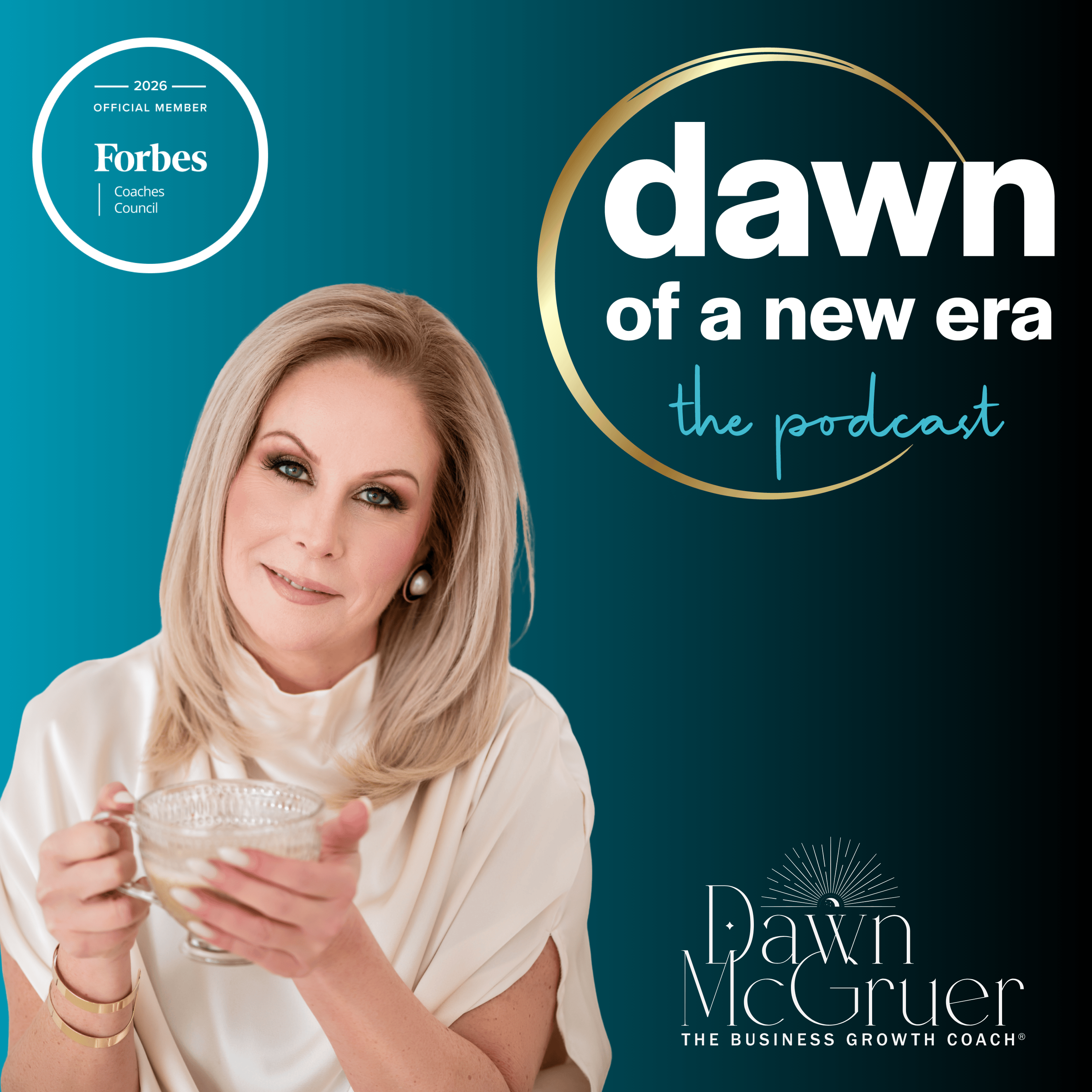
Listen to the Episode
Enjoying The Billionaire Brain®? Follow the show on Apple Podcasts so new episodes appear automatically.
Episode Highlights
Jump to a moment.
- 0:07Avoiding common New Year business mistakes
- 4:09Business strategy and pricing for sustainable growth
- 8:14Setting realistic business goals for the new year
- 12:22Business planning for sustainable success
- 17:30Business growth, mindset, and soulful success
Full Episode Transcript
Read
This transcript was created automatically and may contain small errors.
Welcome to episode 114 of Dawn of a New Era with myself, Dawn McGruer, the business growth coach. And in this episode, we're going to talk about six reasons not to fall into the New Year frenzy. On January 1st, every single year, we see people rush to social media. We see a flurry of email campaigns.
The ads start flowing. The offers are absolutely multiplying faster than we can scroll through social media. And then what happens is by week three and four of January, we see a lull. Why?
Because people have run out of steam. It's so tempting to kind of draw this line of an old year and step into a new one and think we all have to move on and change the world and switch our businesses up and really push to that next level. I'm not saying that we don't want to have this key motivation for success and to really push our businesses into achieving our dreams and our goals and recognizing important milestones. But what I am saying is, is that there should be no rush.
The reason for this, and I'll cover these in six key points, is that number one, a false sense of urgency. Now, what is a false sense of urgency? Well, the New Year frenzy often creates this false sense because it's making us believe that we need to immediately set resolutions and make big changes. We're all rushing into decisions without careful thought.
That can lead to really poor choices and also unnecessary stress. But it can also create a business that we really resent, and this business starts to turn into the beast, not the amazing dream that was giving us the freedom, the flexibility, and the financial growth that we ultimately wanted. The biggest temptation is to always fall back on low ticket, to put really low offers out there. And we start selling, and people start taking us up on these amazing opportunities.
So we start to really push more and get more and more people on there. Consider that if you are putting out an offer or an opportunity, that we don't drop the price so low that we begin to resent what we're actually delivering. Now, we see this a lot in service-based businesses because in January there is a rush for memberships. People want to push out low ticket because there is a mindset that says to them, people have no money in January.
Ultimately, we may have spent more in December as consumers, but if we are service-based businesses or even consumer-based businesses, there is always an understanding of who our market is. If you are dealing with consumers, yes, okay, of course on e-commerce we see a lot of January sales, but businesses in e-commerce still do really well when they don't drop their prices. They just use different marketing techniques. Let's consider if you're marketing business to business and you, as a business owner, are selling a service to another successful business owner.
They suddenly haven't just run out of cash. And okay, we all have to pay our tax in January, but that doesn't mean to say that we're not investing in our businesses. So do not fall into the mindset trap of thinking that people are not spending in January because definitely they are. January is one of the biggest times to invest in personal growth, career development, business development, and so on.
We have made, obviously, resolutions, and also we have dreams and goals ourselves. So why would we not be investing? So please don't fall into selling low ticket because you want to get cash in quick and you think that that's the right way. Think about the facts and the science of your business.
What has worked before? Because it doesn't necessarily mean that you have to create something brand new that's low ticket if last year you sold high ticket and it worked. We need to get out of this whole concept of seasonal wealth, because wealth is not seasonal. If you're a business owner who is growing and scaling, and even if you're on that sort of edge where you're just at the tipping point, where you're kind of reaching that first sort of money goal, you will be prepared to invest to get to the next step.
You know, we've all been there as businesses. If you've hired a coach or mentor, etc. in the past, then you know that you've put an investment in and you've started seeing results. Hopefully you've chosen somebody and the relationship has worked out well.
But let's say you've invested in a training course or personal development. We don't just look at it in certain times of year, and actually January is a great time to really onboard people. I always like to step back and not get caught up in the frenzy, because the first of January I'm always on holiday. I always go on holiday the first week, and I come back the second week.
And I'm not rushing to sell things or get clients on board. But what I'm actually doing in that first instance in January is looking at my current clients, really looking at engaging with them, setting them up to get their success plans in place, looking at what they need in terms of support from me first before I do anything else. Then I look at the opportunities of clients that I spoke to at the tail end of last year, potential clients who wanted to start working with me. So I start to reach out, talk to people about what they want to get in play, get some understanding of time scales, tell people where I'm at in terms of, you know, capacity and availability, and start to then move some meetings in.
And actually within the first week of January, while I was in Lanzarote, I actually closed four one-to-one clients. Now that's half of the capacity that I had for the entire year, and I wasn't pushing. I was just really sort of sticking to my guns and thinking strategically, because what we don't want to do is rush in and start offering these low-ticket items. Because if you think about it, go back to what it takes to really make 100K, okay?
If you imagine that a million-pound business, you could have, let's say, 40 clients for the year who are all paying you £2,000 a month, okay? That's a million pounds. If you're starting to sell something, you have to be really careful of positioning the value and also your time, and making sure that you're still creating space that you can serve your clients efficiently. Because memberships, one of the things that happens, and I see this a lot, people start joining.
You might get 100 people into your membership, let's say in January, and then people start to fall off, okay? And really by sort of month two and three, you may have half the amount of people you have in that membership, but you're still putting the same effort in, but you may have half the revenue. And then the problem comes is you're starting to think, I need more people in. I need to replace those 50 people.
But because you did a big launch in January, then you're now thinking you've got to relaunch again. How are you going to get that level of people on board? And because maybe you did an introductory offer, you're thinking, well, do I have to go back and do that? And this cycle begins.
So be really careful what it is that you're actually promoting. Now, I'm not saying do not do low ticket. I'm saying look at your business model and understand strategically if your model works. So if you need to generate a level of income, look at that revenue figure and work it back.
So that you see a breakdown not just monthly, but weekly, daily, and hourly. You look at the rates, you look at your pricing, then you start to look at the level of clients. Then you start to think, is that achievable? You know, for me to get sort of three to five clients a month is very easy and feels really light.
And I use a three-step marketing plan. I carry the plan with me every day. I stay on track. I say no to the things that don't serve those goals.
This brings me on to number two: unrealistic expectations. What happens is, is I see this all of the time. We go online and we get caught up in FOMO, fear of missing out. We're looking on social media.
We're seeing people who we believe are doing bigger and better things, and we think we can never catch up with their journey, and we start to put more and more pressure on. This pressure to make grandiose resolutions can create unrealistic expectations, and then we set ourselves up for this utter disappointment. And when we set goals that are way too ambitious or unattainable, then we're not going to achieve what we wanted. So it's important to set realistic and achievable goals.
And for me, when I do my three-stage plan, I work with clients a lot in power hours or half-day sessions where we look at either elements of the business from pricing to models, or we're looking at the whole sort of 2024 plan. Just last week, I did a full VIP day. We worked through everything on the business, and one of the things that really, really struck a chord with me is that we had to rework all of the targets that had been set because they were totally unrealistic. And again, the pricing would never have been achievable to get the level of income because the actual cost and the money and the effort that would have had to go behind the marketing to get that level of clients was just completely unrealistic.
It would never, ever have happened, and it certainly would not have provided a profitable and sustainable business, and definitely not one that brought joy and freedom. So number three is overwhelm and burnout. So this new year...
Frenzy can contribute to overwhelm and burnout. And one of the things I'm definitely seeing is people's paces slowing because online everyone's turned up 1st of January and they're push, push, push, and you're competing in this utterly saturated social media space, and everyone's saying the same thing. We're all talking about what we're going to be doing for 2024, and I've seen so many of, Oh, this is my reflection of 2023. Switch it up, do something different, and step out of that space because you don't want to be clustered in with all of that noise.
Switch something up, make things different, okay? We are tired of seeing the same thing, and we will tire ourselves out. So trying to change multiple aspects of, like, our lives and business all at once, you know, can be completely overwhelming and definitely unsustainable. This is why I've always done my New Year's resolutions starting in October, November, December, so in Jan I'm kind of, like, calm and in flow, you know.
And at the moment, I have never felt so certain and so clear and had so much space that I feel like I'm just operating at the best level of CEOship, honestly. I have multiple businesses, and I do stop myself and think, you know, why am I not feeling it? It's because I have come at things from a strategic point of view rather than emotional, and emotional tends to drive us in a different way. Fear drives us in a different way.
When we have set things up and we know that we're operating from the right space, we're doing things from our gut and it feels right and it feels aligned, then that's half of it. We all know what we want to do, but it's knowing exactly that we're doing the right things that are going to move the needle on the business. And this is the thing that when I talk to clients, that's definitely why I'm here. So it's better to focus on gradual improvements, you know, consistency, and maintain a sustainable pace, because if we know that every day we're doing the actions that are absolutely driving our business forward, pulling in the right levels of revenue, and we know that the actions that we're doing are guaranteed and proven.
Proven, then we know that we're going to have that motivation and mindset shift that is going to push us through, and we're going to stand up and step up as a true CEO. This brings me on to number four: lack of personalisation. And honestly, I looked at social media today, and this New Year frenzy promotes like a one-size-fits-all approach to goal setting. It's all like, let's rock up and let's do our, you know, whole planning session and things like that.
Strategy is unique, and it's bespoke to people's age and stage in business. It's bespoke to what their dreams and aspirations are. Not everyone wants a six, seven, eight, nine-figure business. People want a business that definitely brings joy and freedom and, yes, financial security and certainty to be part of it.
But really, how do we create the business that we want? Well, we have to design our day to drive that business, because just showing up and doing a business that everyone else does, why does that bring you joy? Why are you different? For me, I think you design how you want your life to look, and you look at what brings you enrichment and fulfilment, and then you design your business around that, and then your strategy will come from that specific route.
If we all show up and we start pushing and setting goals at the top end, you know, and doing all these planning days and masterclasses and sessions, it becomes so overwhelming that you set these grandiose goals. It's not bespoke to you. You know, you might have a figure in there and you think, right, okay, I've set my goals, but we need to break that down into specific actions, okay? And we need to know exactly when that's happening, who's doing it, what the timescales, you know, and there's so much that goes into it that I feel that stepping away and just concentrating time on your own business, rather than moving into this space where everyone's doing goal setting, everyone's moving at this pace, we get caught up in other people's clutter, whereas we want our own clarity and actually want to put our blinkers on, turn the white noise off.
And this is why it's essential to personalise our own goals and focus on what truly matters to us individually, because whatever someone's aspiration is, everyone is unique, you know, with different needs, aspirations and circumstances. So it's no doubt that when I see people disheartened in January and totally overwhelmed and just like not knowing how to lift the fog, it's because they've joined these sessions where it's just all about generic goal setting and generic planning. And, oh, let's simplify our plan and let's do this. That might not work for you.
And this is why I do feel that deep work with clients and working within the business as a virtual business partner is why my clients' results, and we are so successful in the coaching and mentoring space, because without that, people would go off and just do something generic, okay? And that may not even fulfil the goal they need. So when I see these things being plastered all over the place, and I see people coming to me totally just like, Dawn, I have no idea where to turn, I get it, because if I went online at the moment, we are being bombarded. It's like, if you haven't done this, oh my goodness, you know, your whole 2024 is going to fail.
No, it's not. Step back and look at what you want. Number five: short-lived motivation. So we get this initial burst of motivation that comes with the new year, but it often fades really quickly.
Often by week three and four, we see people's New Year resolutions and goal setting and strategies, they just start to falter, and then things start to fail, and people become disillusioned and really unmotivated. But many resolutions are abandoned within this first few weeks because it's leading them up a path that's really unsustainable, and then that leads to feeling failure and discouragement in life and business. So we need to think about sustainable change, which requires a longer-term commitment, not just short-term motivation. And we need to look at ways that when we work with our clients, you know, and this is why I always work with my clients for 12 months.
When we're doing one-to-one work, it is important because there are stages in the business. What happens in the first 90 days then shifts up into the months three to six. At six months, there's a massive, massive pinnacle change because the business can't go through the same actions and expect the evolvement. There are different steps that bring to different revenue incomes, and then There's a capacity that's hit, and then if you bring on more team members and costs go up, things have to change and evolve.
So for me, if I want real results, I want to put milestones and benchmarks in so that there's realistic expectations. But there's 30-day changes, 60-day, 90 days, three-month changes, and then we're on to six months, nine months, 12 months. The whole business evolution changes and happens in that time, as well as mindset shifts. And what you want may change because your initial goal could be pushed, you know, and you become more aspirational, and then you create more inspirational content for your audience, and maybe your packages change.
You know, there is so much in the dynamics of a business. So number six, continuous improvement versus annual reset. What does this mean? Well, instead of waiting for the new year to make these positive changes, it's better to adopt a mindset of this continuous improvement throughout the year.
And I love this because it takes the pressure away. I work in batches, and I love this because I always have, like, projects on the go, but my milestones are near, so it feels like I'm completing something, moving to the next, and it's just this constant evolvement. And this is the whole dynamicness that I was talking about because for me, I want my business to be fluid. I do not want to start thinking, Oh my goodness, I've set this thing up, or I'm running this, and I have to do it for the rest of my life.
That thought makes me feel physically sick. If I just know that everything is in flow right now and this is what I'm doing right now, then that's great. So I do what I really enjoy, and what comes from my gut is absolutely the thing I want to do. If I feel even the slightest resistance towards something, I don't do it.
And this is all about my main focus: success from your soul. And this is why I called my mastermind Success from Your Soul, because so many times I... I see people being pushed into building these businesses that they don't want. I've seen coaches and mentors drive people up a path that doesn't even suit them.
It's not all about money. It's about what you feel. I always talk about enrichment and this experience of life. We set these goals, but we need to enjoy the journey of getting there, not just getting to that destination, because it becomes soulless.
And this stems from when I built my businesses. I started running a business that was hard. It really was hard, and I made it hard myself because I was thinking, well, you know, the harder I work, the more I put in, and plow, plow, plow. I was traveling, people around me were like, Dawn, you know, you'll all pay off.
And all these mindset monkeys and also disbeliefs and untruths were put into my mind because this is kind of how I was brought up. This is what I believed, and this is corporate life. And then I started to think, well, there must be an easier way. And thank God there is.
There absolutely is. I started to design things that I wanted to do. When I came at it from that angle, everything felt better. I literally shocked my team because I stopped doing corporate training.
I was getting paid a vast amount of money, from £5,000 an hour to do training and to do public speaking. I was getting paid a lot to speak on stage, and I just basically said, I'm not doing that. I just do not want to do that for now. I will pick and choose the things I want to do, and I will go on stages that I want to go on, and I will travel when I want to travel, and I want to actually combine.
Travel and work, so that it's not holidays. It's that I can be away, still work, still do fun things, and have that balance. And my goodness, that whole change changed my life. And that might sound like a sweeping statement, but it literally did.
It was the biggest change ever. And for me, I just want to make this clear because progress should be a constant journey rather than just a once-a-year reset. And if there's something you're not happy with, change it. You designed this business.
You have the capability. For so long, I felt like, Oh, I'm stuck with this. I can't change this. Well, I've done that, and people won't like it if I change it.
These are all things I'm telling myself, and it's utterly untrue. You know, you take control and you drive your destiny, and you start recognizing your dreams. So remember, it's okay not to fall into this New Year frenzy. Take time to reflect and set realistic goals and focus on consistent progress rather than this whole temporary hype.
And believe you me, you will feel ten times better because when you come at success from your soul and everything you're doing and creating feels right and it feels in flow, that whole energy is different. Your motivation, your mindset, you start opening up the world of, like, infinite opportunity, and that is the key. And if I can leave you with one parting thing, is that make it simple, okay? And when you're looking at your plan, if you want to know more about creating plans and strategies, maybe not your strong point, come and talk to me.
Go to DawnMcGruer.com. There's loads of resources, literally from my free podcast right the way through to other sort of trainings and masterclasses and things like that. Go and have a look at my books and see if there are things that you can take from there.
If you want to look at ways of exploring working with me, hit the Work With Me page. Have a look at my Instagram. Have a look at Dawn, at Dawn McGruer, and see what opportunities there are, you know, and if it resonates. Then book a call.
Let's chat because for me, this whole way of working has brought such an impact to not just my life, but to my clients. And one of the things that I talk about is that we want to spend less time and money and effort on our marketing and give us our dreams. As entrepreneurs, we set our businesses up for a reason, and you need to go back to that reason and really lean into what your why is and think, is your business connecting to that? And remember to tune in.
This podcast comes out every other week, Dawn of a New Era. And if you enjoyed the podcast, please, please, please give me a rate and review and let me help more people in the world of scaling and growing. So good luck, and remember to be powerful in your choices and step up as a true CEO. Take care.
Thank you for listening to Dawn of a New Era podcast. And for your free checklist to find out how to boost your business for growth, profit and success, and join our community, go to dawnmcgruer.com.
About The Billionaire Brain® Podcast
The Billionaire Brain® Podcast with Dawn McGruer, formerly Dawn of a New Era, explores the psychology, neuroscience and behaviours behind extraordinary success in business, wealth and life.
Through solo insights and conversations with founders, investors, millionaires, billionaires, authors and experts, Dawn explores how identity, thinking and behaviour shape what we create. New episodes are released regularly on Apple Podcasts, Spotify and YouTube.
- Episode · 114
- Published · 18 January 2024
- Run time · 23:22
- Host · Dawn McGruer
About Your Host
Dawn McGruer is an entrepreneur, 5× founder, award-winning keynote speaker and Forbes Books author of The Billionaire Brain®.
With more than 25 years in entrepreneurship, Dawn's work explores the intersection of founder psychology, neuroscience, wealth, identity and business growth.
Keep Listening