Business Systems That Help You Work Smarter with Renée Warren
What if working smarter starts with deciding what no longer deserves your time? From documenting repeatable tasks to choosing fewer marketing channels, a simpler business can create more space for the work that matters. This conversation connects practical systems with a more integrated life, where family, wellbeing and personal priorities are scheduled first, rather than fitted around an expanding workload.
Dawn McGruer joins Renée Warren, founder of We Wild Women, coach to female entrepreneurs and host of Into the Wild, to explore delegation, visibility and sustainable ways of working. Drawing on Renée’s experience of growing a PR agency while raising two young children, they discuss documenting standard operating procedures before hiring, building valuable partnerships and focusing on activities that generate revenue.
For female founders who feel stretched between delivering, marketing and managing every detail, this episode offers a clearer way to assess where their attention belongs. You’ll take away a shift from constant activity towards deliberate priorities, with practical starting points for handing over tasks and protecting time for your strongest work.
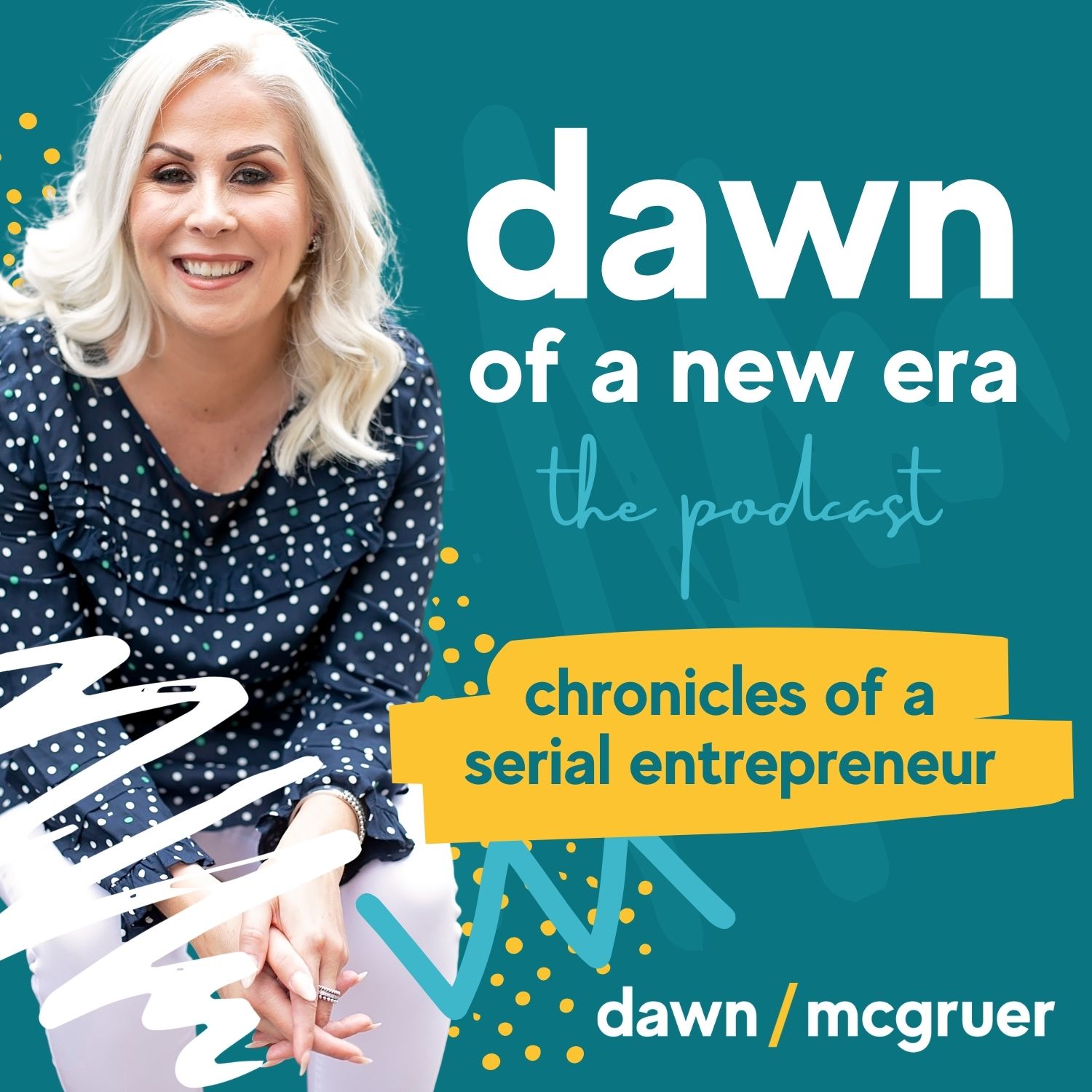
Listen to the Episode
Enjoying The Billionaire Brain®? Follow the show on Apple Podcasts so new episodes appear automatically.
Episode Highlights
Jump to a moment.
- 2:56Becoming a Mum, starting a business and managing the work-life balance {10:11} Social media fatigue and the art of working smarter, not harder {22:03} The 80-20 rule {32:02} Knowing when to say no {34:18} Success is self-defined {40:44} Setting personal goals and managing productivity {46:05} Consistency is your currency
Full Episode Transcript
Read
This transcript was created automatically and may contain small errors.
Welcome to Dawn of a New Era, a business and marketing podcast with a difference, ranking in the top 5% globally for people who want to start, scale, and grow their own business. Dawn McGruer shares tips to improve marketing, motivation, and mindset, as well as her own real-life challenges and experiences as an entrepreneur. Guests include some of the world's most inspiring leaders too. So if you are an aspiring, established, or serial entrepreneur, this is your go-to podcast to fast-track results and rise to meet today's challenges and master the art of online influence and business success, and avoid common pitfalls along the way.
Never miss an episode and subscribe and listen at dawnmcgruer.com. So happy Monday, everyone, and on this week's Dawn of a New Era podcast, we have a very special guest who is joining us, Renee Warren. So she's a fellow podcaster.
She has her own podcast and also a speaker, author, and you are the founder of We Wild Women, and then your podcast is Into the Wild. Yes. So we're going to be talking about all things entrepreneurial, and it's great to have you with us because I've just been sort of reading through your bio and just trying to see what your background was, and it's very similar actually to mine, because I started my agency back when I was 21, and you were kind of very much content marketing. We were anything to do with digital, and then that's where my sort of academy grew from, and then that's where my personal brand came from, where I started the coaching and mentoring.
So we followed quite a similar path, I think, in the way that our businesses have unfolded. So, can I pass across to you just for a little intro about yourself, Renee? Yeah. So I'm Renee Warren, currently located on the west coast of Canada, so I feel like almost a full business day behind you.
But I started into entrepreneurship when I was 17 years old. I started a restaurant with my sister, and it was a seasonal restaurant, so we ran that for four years, which was enough for us to pay for college and not have debts. And then I've always had some sort of agency or consulting business. And then one year, I was eight months pregnant with my first son, Max, I co-founded a PR agency because I was doing a lot of content marketing and social for tech startups in the Valley, and my friend was doing PR for tech startups, and we started doing projects together.
And so, again, eight months pregnant with Max, I was sitting across lunch table with her, and I essentially proposed to her to start a PR agency together. And she's like, You're crazy. You're pregnant. And I was like, Yeah, it's just a baby.
They sleep all day. No problem. And so we started this company, and it grew very quickly. And so my son Max was about four months old when I found out I was pregnant with my second son, Noah.
And so in the first year of starting a business, I had two babies, so they're Irish twins. Yeah. And so we talk about systems, we got it down pat because my husband's in the tech space, so he was starting a startup and he was raising a round. And so all of these crazy things transpired for us to create a more integrated life.
And now I am out of the marketing agency rat race, and I coach female entrepreneurs with a keen interest on PR, obviously, because I love talking about it and I love helping create systems around it. But yeah, that is it in a nutshell. Wow. See, do you know what's fascinating is so many entrepreneurs that I talk to, most of their big ideas have come from the points of their life that has been the most crazy busy, the most, you know, inappropriate time to actually start it.
Because I think sometimes when you're maybe thinking about doing something, it could be just the distraction that you're not really feeling all those big emotions when you're doing it because your emotions are elsewhere. Do you feel that, you know, yours came at a time because of that, or why and where did you do it at that time? I always laugh about this because for me, it's like I don't actually remember the first two years of my kids' life. Because when your body is living, like surviving, right?
We were in survival mode. But like the trauma of lack of sleep and like all the little things that happen when you have newborns, I can't remember. But I will say this, obviously those situations in our life, those raw, rough moments, raw years, definitely contribute to the people that we've become today. And it's a tough lesson learned.
But just like starting a business, you can't really grow unless you've failed at something, because it's that failure that makes you stronger. Because I can't imagine any sort of entrepreneur that's grown their business over three to five years, making millions of dollars and never failing. Because like the worst case scenario is like something bad is going to happen. If you've never experienced the minor little, you know, paper cuts along the way, then when the big thing happens, you won't be prepared.
And so with this, my husband and I created, like we're really huge proponents on the integrated life. And what COVID has taught us too is the ability to be able to learn to work from home. We've always worked from home. And so we took it upon ourselves to kind of teach other people too this whole remote work thing.
But now it's kind of like, kind of normal. It's kind of normalized now, day to day, isn't it? Yeah, but yeah, we've learned a lot in having those two babies and growing businesses. And, like, we had clients from South Africa to San Diego, all over the world, different time zones.
We had employees across eight different time zones. So we managed a lot. Wow. You know, when you talk about integrated life, I talk a lot about my big thing during COVID was really kind of leading an enriched life, something that, you know, because we were kind of so busy and we were, you know, like I was traveling and I was just doing, doing, doing, doing.
You often forget this work-life balance because you're in it, and it's not until you stop that you realize that actually, you know, there's more things happening. When you talk about integrated, is this what you mean, kind of like having a balance of things and, you know, work, family, all those bits and pieces? Well, it's like it's not so much about the balance because there obviously are some weeks, some months that are better than others. But it's really about, like, scheduling your priorities and not prioritizing your schedule.
So that means, like, in the 24 hours we have in a day, what's the most important thing for me is time with my kids, exercise, nutrition. And, like, once I have those scheduled and dialed in, then everything else can just fall in, right? Because it's sand; it just fills in the cracks. And, I mean, now it's—before it was like nine to five, Monday to Friday at least, right?
Maybe it's like eight to six. Maybe it's Monday to Saturday, people working so much. But the reality with what a lot of us can do working online in the digital world is we don't have to work those hours. We can work when we're productive.
We can work after we take the kids to the dentist appointment. We can schedule in our workout any time in the day. If it's between meetings, it doesn't have to be after work. And so the integration means that your life isn't about working so much as it is about putting in those things that are significant to you—the priorities, the, you know, talking to your parents on the phone, bringing your kids to soccer lessons at 3 p.
m. if that's what it means, and, like, clocking out early. I think there's this huge pressure, you know, people see this like 5 a.m.
start work, and then I think there's a guilt with entrepreneurs as well, where sometimes we forget that freedom and flexibility were why we started this in the first place, and we feel like we should be working, working, working. And I saw a lot of entrepreneurs during COVID and the pandemic that because they were working at home and there was less time traveling, there was more time, they were really just kind of in it, like all the time. And it's important, isn't it, to step away. What do you do for your downtime?
Like, what's your creative space? So, oh, downtime. I love reading. I love doing CrossFit and spending time with the kids, so going to the beach, just being with them.
We used to do a lot of traveling, and then with COVID that kind of stopped. But I also play the drums, so I'm a drummer. Yeah. So that's like my meditation.
I find CrossFit and drumming is my form of meditation. Being, like, visiting friends, like being as social as we can given the restrictions. But yeah, I feel like that's enough to fill my days. Well, we've been talking a lot in previous podcasts about what we're feeling fatigued from as entrepreneurs, and I love the way that you talk about automation because that's so on the same page as me.
Everything for me is about kind of taking the repetition away and just kind of being more efficient. But when we think about sort of how our businesses have grown, like what would you say is the biggest thing that's kind of like pushed you forward? Because a lot of people feel a bit fatigued from, like, showing up on social all the time.
I feel like this online visibility is, like, too much, especially because we're on Zoom 24/7. What do you think has contributed to your growth, the actions that have impact? It is connecting, collaborating, partnering with the right people. And I'm just, I'm in and out of, like, social media fatigue right now.
And so, like, there'd be some weeks where I, like, show up and I'm doing reels and I'm doing all this stuff and I feel great. But then after a while, it's just like, like, I just don't have sometimes the emotional strength to deal with the trolls. Yeah, and capacity to just be showing up there and putting yourself out for it. It takes a lot.
It takes a lot to be like, rah rah, let's do this. And I believe it is just as important to step back and take a pause and maybe turn it—like, I deleted TikTok off my phone a few days ago because I found it very distracting. Yes, I don't, like, I could just—I don't have the discipline to not look. I see the red dot and I'm like, you know what?
No. So it's about that, like, yeah. So to answer your question, it's just you have to be okay with not checking things all the time and not showing up, and just knowing that things will transpire. But for me, it was the partnerships.
It was connecting with the right people and, like, intentionally but also unintentionally trying to find these people. And, like, the more you expand your network in terms of, like, the relevant people that have the same sort of values as you, then the faster you can grow. So I don't know a single business that hasn't grown without their network. And if at the end of the day, there's the only thing that I could keep for my business, it'd be the people that I've connected with.
Yeah, the community and the collaboration. And I see this. I mean, you know, all day we're teaching people how to use digital marketing and social media, but we're not saying you've got to be there on 24/7. I mean, I think nowadays it's about working smarter, not harder.
And like, you know, LinkedIn, one of my fave networks, I'm spending like 10 minutes a day, but I'm getting huge impact in terms of the partnerships you talk about and community. I don't think you have to be there all the time. And I think, Amanda's just said, social fatigue is a real thing. It totally is.
But I think for me, social is an element that if we use it correctly, and as you say, you're building these partnerships. Do you think your podcast has helped with these partnerships? Because for me, it's changed the whole way that I meet people. Yeah, it definitely contributed.
So obviously, as I have big-ticket clients, so I ask them, Where did you hear about me? Some of them will say, Oh, I found you on Instagram, and then I started listening to your podcast, and I realized, Oh, she knows what she's talking about, and I want to work with her. And it's gone the other way around as well. I felt like with the podcast, it's helped me to establish a sense of authority in the space, like thought leadership.
But yeah, and just like having incredible guests on my show and connecting with them, it's absolutely helped. And I'm only one year into podcasting too, so it's kind of new for me. Same as me, same as me. Okay.
I started mine in July 2020. It had been on my to-do list for like three years, and lockdown, I wasn't going anywhere, so I thought, Hey, why not start a podcast? But do you know what? For me, as I'm talking to people and as I'm sharing my message, it definitely helps in terms of being able to express what you stand for, your kind of mission and vision, and people build this real relationship with you.
Because for me, I've been very much behind corporate brands for our academy, and... I think it's helped share a lot of my own personal life experiences. One of the life experiences we were just chatting about for you before we come online was how you met your husband. So we got into that, so I need you to share this with me.
Right. So we met—well, my story is different than his. We met on Twitter. But what's interesting about it is, so I used to live in Toronto and he lived in San Francisco, and I saw that he was coming to town to speak at a conference that I was attending, and so I just connected on Twitter.
And this was like the very early days of Twitter, where there was not a lot of people. And so whenever you would, like, open up Twitter, it wasn't just a bunch of content because there wasn't that many people online. And I just said, Hey, I would love to pick your brain when you're in town. So, like, Twitter turned into a couple emails, and, like, I was already seeing somebody else, so there was no intention there.
But then by the time he ended up coming to town two months later, I was single, and we just met, and it's been a lovely experience ever since. So it's been like 11 years now. You've really had to live the social media collaboration thing there, haven't you, really? Oh yeah.
I was like social media influencer in Toronto. I got, like, free Virgin Air tickets to, like, San Francisco. Yeah, I don't know. They don't do that stuff anymore.
But yeah, I mean, at the time, social media was pretty much just like Twitter and Facebook. I think one of the things that I'm hearing so much is that as we're coming out of, obviously, the pandemic, fingers crossed, people are a bit kind of uneasy, and I think there's an anxiety around business and what people should be doing because we were almost in a little bit of a pause. For me, I feel like I've just worked all the way through full speed ahead, but some businesses have kind of had to wait. They've been working on the businesses behind the scenes.
But people are like, Don't know what's next. What advice would you give to entrepreneurs that are just kind of like in that stuck overwhelm, like, I don't know what to do next, like prioritizing? Yeah, I always say people are often stuck because they have too many ideas. So most businesses die from constipation and not starvation, right?
They're constipated with ideas, which overwhelms them, which doesn't allow them to focus. And so I always say, step back, look at the things that you do that actually drive your business forward, so they move the needle, revenue-generating activities. If it means that you're on Pinterest and LinkedIn and Twitter and YouTube and TikTok and you realize, oh, Pinterest and TikTok aren't really doing anything for you, but you're wasting all this time there, then why do it? Why be there?
If it's going to make you feel better, but it's not moving the needle, it's actually not going to help you in the future. And so I always say the best business are the most simple. They have a very simple system. They have simple channels.
And here's the thing too, is they put the time into these specific channels for an extended period of time. I'm not talking two weeks or three months. It's even like a year. What can you do for a year, one thing or two things, that'll help you drive your business forward and simplifying.
Pardon? What's your favorite channel of choice at the moment then? It's Twitter. I'm just starting out Twitter.
Instagram. Instagram has been super helpful in helping me connect with new prospective clients and just kind of seeing what's going on. And I mean, the algorithm is serving me well right now because we're in the process of renovating, furnishing a new house. And so my feed is pretty much like people that are in business, friends, and a bunch of really great furniture.
So it's positive. Yeah, no, Instagram works and my podcast works. But really, the big thing is just, like, it's networking. Like, it's just knowing the right people in the right places.
And yeah, it's been super helpful. Yeah, I think so. See, for me, I've always been on LinkedIn, and I know loads of people are kind of not fans of LinkedIn because it's always been the network where it's a bit more clunky to use and people kind of not really knowing what to do. But, I mean, I've been using it since, like, 2002, right?
So it's taken me a while to get to where I am. And, you know, my mission is to kind of get to that 100,000 followers, and I'm like at 30,000 direct connections, about the same as followers at the moment, so I've got a way to go. But I think it's showing up consistently, but it's showing up in a way that suits you, and I think this is a big thing. And I think, like you said before about the social fatigue, you know, not every day do I feel like showing up on social media, and I don't.
I show up when I feel like I can give, and that I think people need to understand that you don't have to be constantly on it, on it, on it. But what you have to do is, I suppose, think about what's valuable and what quality over quantity, I guess. If someone said, right, okay, they're maybe, you know, any stage of their business right now, what resources have you been using or would you recommend for entrepreneurs who are, you know, kind of at any stage right now? In terms of, like, social media or just in general?
Well, it could be like books, podcasts, anything that you feel like has helped you or you think would be useful for entrepreneurs right now. Okay, so books, Love the Big Leap by Gay Hendricks. And why this book particularly, it took me forever to pick it up, is because it really teaches you about your limiting beliefs. Everybody has them.
Everybody functions in their own zone of genius. So he classifies four zones: zone of incompetence, competence, excellence, and genius. And when you're working in your zone of genius, you are really focused on the task.
get hand and it's like time flies, you're in flow, like things could be happening around you, you don't even know. And so if you're an entrepreneur, obviously there's a lot of things you have to do in your business that you don't want to do, like bookkeeping and all this stuff. But when you have more time dedicated to your zone of genius, then you're not only happier, but you're actually moving the needle, driving your business forward. So definitely that.
I have so many favorite podcasts, so I can't recommend just one. It depends on what I need. So there's like marketing podcasts that I love. There's just like generic podcasts if I'm out for a walk.
I'm like, obviously want to listen to Oprah and who she's interviewing. It's just when people ask me, what's your favorite book? What's your favorite business book? Or what book are you reading now?
I always have three books on the go, always. I have one for parenting. I have one for business, and then a general, like motivational type book, because what— so my rule is 10 pages a day. I have to read 10 pages a day.
If I'm— again, I usually read them before bed. If at the end of the day and I had a really tough parenting day, then I'm going to grab that parenting book, and I'm going to make sure I'm getting the information I need for that situation. And like, hey, if my parenting's on check this week, then maybe it's the business book that I'm grabbing. Yeah.
But I always say don't connect or don't, like, listen to the podcast or read the books just because everyone else is reading them right now. Grab what's important to you in this moment to help you. Yeah. And I feel like I've only ever read— right?
Doesn't matter. It's whatever is helping your mindset and your headspace, you know? I don't think we all have to be in the kind of uber professional learning mode all the time, do we? Sometimes you want to be listening to, you know, a little bit of a chat show kind of thing, and it's different things, isn't it?
I think for different moods. And some people listen to podcasts as they work. I listen to music nonstop. And, oh, you're missing out, but I can't have someone talking to me all the time.
Well, I'm trying to think. So, because I'm, like, lost track and I've moved on. Well, and I agree, and I have a good rule for this. It's the 80/20 rule.
So you should be written consuming content 20% of the time, but 80% of the time applying what you learn. So I have friends and people that are perpetual students of life. I'm like, this is great. We should always be learning, but there's also the other side of this called application, which is equally just as important, if not more important.
People just give up too soon. They put something in, like two weeks in, I'm done. It's not working. It's like, no.
Like, they say the last mile is never crowded because most people aren't willing to go that last mile. Exactly. And this is it. And the thing is, is, like, all the things you're saying totally rings true to, I think, a lot of people's mindset now.
Like, you don't have to show up when you don't want to show up. You have to do what's important to your business and obviously implementing things and also taking that creativity and headspace. So I talk a lot about marketing, motivation, mindset. You know, marketing is great, but without having that motivation and the mindset, what advice would you give about delegating?
Because you said about, obviously, being in this genius zone, how do people let go? Because, like, for them, the business is their baby, and sometimes it's quite difficult to let go of things. So the easiest way to do it is just create your SOPs from day one, so your standard operating procedures. So with a lot of my coaching clients, like, But I don't even have a team.
Why would I need that? I was like, But you're gonna have a team someday, and it makes it a heck of a lot easier for you to train people if you have everything documented. And I just use Google Docs and Google Spreadsheets for this. So my spreadsheet is kind of like the table of contents for my SOPs, and you can go and you click on a Google Doc that brings you to, you know, what's the social media or the podcast publishing document, teaches people how to publish a podcast for me.
And so start by doing that, and then when you look at all of the tasks that you do in the day that you shouldn't be doing, then you start creating just the job description for that particular role. And as an entrepreneur, I always say you should always outsource legal and accounting from day one. Like I pay, I don't know, $400 a month to my bookkeeper, and I sometimes she's doing a lot of work, sometimes she's not. But come the end of the year, when it comes to, like, preparing for taxes, I don't have to do anything, and I know how much it's going to cost.
I already paid it through the year, right? It's like, oh, it might be expensive this month, especially if you're first starting out. But eventually it gets to the point where things are so systematized, you know how much taxes you're going to have to pay. You know when things are due because you've already outsourced that.
You don't have to worry about it. And it's with somebody who probably knows bookkeeping a heck of a lot more than you do, so there's less likelihood that you'll make a mistake. So I say it really depends on the task, but communication is the most important thing. It's like, here's the task at hand, but here's my expectations for what I want in this role.
And I always say start with a test case. So whenever I've hired an employee, we did a one-month test project. I paid them, so they acted like a freelancer, just to see. And, like, one month to some people is not long enough, but just to see their capacity and capability to do the work with minimal instruction.
It's kind of like, can they read the play? And if they can, then we hire them. And most people, it's not so much their credentials that we look for. So this is all to do with freelancers too, or outsourcing or hiring.
It's their ability to read the play, and it's their coachability. Like, I don't care if you've never done social media before, but if it's going to take you only, like, a few hours to figure it out and you're going to crush it, I'll take that chance. Yeah, exactly. And I think this is it.
I mean, especially in the digital marketing space, we see so many people who— have not had experience to get into digital roles. So, you know, someone's got to give them the first chance somewhere. And often the people who have never done it before, they've not got any bad habits. So they're doing things and they're immersing themselves in the world and starting fresh.
So it can often be the best thing, can't it? You know, in terms of finding somebody who's maybe newer to it and maybe hasn't got the same experience. So, yeah. Do you think, you know, when you meet someone, do you go with your gut a lot?
Oh, yeah. I have stories about not going with my gut, but I’m like this particular applicant or somebody looked good on paper, and—but my gut was like, no, no, no. And I’ve had nightmare situations because of it. But 100% go with the gut.
And I mean, women’s intuition too, we just know, right? But I think there’s a process. Like, you got to get through the initial filter. Like, we just finished hiring a full-time nanny, and we have this whole recruiting filter, but the decision-making factor comes down to what does my gut say about this person?
And it might be like, oh, well, she needs—she’s a great fit, like values-wise, but she needs to be trained here. Then if her only deficit is the fact that she doesn’t know how to, you know, grocery shop or scrub a toilet, it’s like, I’ll take that chance, right? I can teach her that. Yeah, exactly.
Some skills are transferable, and some things, you know, it’s just like, yeah, it’s choosing the important things. And I think one of the points you made earlier that I just want to touch upon, because I think it’s so important, is this simplicity. So a lot of people obviously will be thinking about how can I diversify? And we heard all this, like pivot, change your business, add more, you know, items, you know, change the changing needs of consumers, obviously with, you know, the pandemic.
But actually we’ve been doing the opposite. We’ve been kind of like scaling everything back, simplifying it down. If somebody is kind of in that position where— It's a bit like the runaway train, you know, they've kind of got all this, and they don't really know kind of how to bring it all back in. What's your advice to kind of simplifying and bringing that clarity back to the business?
It's baby steps, because, like, that's the only thing that is sustainable, is—I know, like, people are like, Oh, I want to lose 20 pounds by the summer, so I'm just only going to drink water for 50 days. I'm like, Yeah, good luck. It's like, just scale back a little bit and a little bit and a little bit. And, like, a perfect example is, like, me and Pinterest.
I had hired a lady last year because she was convinced—she convinced me on Pinterest being this big conversion tool. And I was like, Well, show me then, prove it to me. And it didn't end up being the thing, right? It ended up being Instagram and my podcast.
So it's just about looking at all the tasks at hand, all of these things, looking at your calendar and being like, Okay, what isn't necessary today? Are you doing this because you feel bad? Are you jumping on an interview at, like, 6 a.m.?
Hello, 6 a.m., my time. Because it's something you want to do, or is it because you feel obligated to do it?
Like, the obligation means you're not going to show up in the energy, in the state that the host or the guest is expecting. Yeah. And just look at, like, I always say look at the signals too. Like, look at the signals.
Is something or someone giving you a sign that you need to slow down or stop doing this thing or pause it? So there's the Eisenhower Matrix of delegate, delay, do, or delete. So just know your priorities, and you know them. Like, your intuition is like, Oh my God, Renae, you're so right.
I should probably start a podcast. You know, that's just an example, but you know. And then you also have to ask yourself, what's stopping you from doing that thing, or what's stopping you from not stopping doing that thing? Like, what are your limiting beliefs?
So, food for thought. It is, and do you know why? Every day I'm still doing that, you know, and I've been in business 20 years. I, you know, you started at 17, I started at 21.
I'm still doing this every single day. I'm still thinking, like, sometimes I look at my diary and I use a lot of time blocking, and I only do calls and things on a Thursday. But sometimes it just kind of starts filling up again, and you just have to kind of rein it all back in and start thinking, like, why am I doing this? You know, because sometimes if, like, you're, like, giving your time and energy to people, you do kind of get roped into it, and you start kind of, you know, moving forward maybe in things that are not impacting positively in your business.
But do you think that you just get kind of slightly quicker at seeing it, or—because, I mean, for me, it's something that I am always trying to delegate things, and I'm trying to look at my sort of working day. What would you say has been, like, your turning point of kind of where do you feel now in terms of balance? Like, do you feel like you've kind of got it there, or— No. No, I don't.
There's so much opportunity. Like, I get pitched a lot. So the funny thing is, being in PR and coaching on PR, is how much I teach about how to pitch and build those connections. But I also receive a lot of pitches for people to be on my show, to contribute to the blog, to be a collaborator partner.
And before I used to be like, Yes, say yes, yes, yes to everything, right? So my husband is like, when I first started public speaking, he goes, Just say yes to every opportunity to go out there and start practicing and then eventually start charging for it. And like even Rachel Hollis said at one point, she's like, Just say yes to everything. Go out there and then just, like, you know, get the rust off and get better at your craft.
But there does come a point when you have to start saying no. And the no feeling, again, from intuition is when you're like, I just, I don't know, like, what's in it for me? And I think it's okay to ask yourself that. I know a lot of women are like, No, no, I have to be everything to everybody.
But if you're not protecting your time, then you're gonna burn out. And a lot of clients for me, they say, Well, I have FOMO. What happens if this interview with Dawn is gonna be like the bee's knees for my business, and all of a sudden I'm gonna be making like two million dollars because I show— I'm like, Well, Dawn, I really hope this happens. Absolutely, yeah.
But it's like, is it because it's something you know you want to do and need to do, or do you feel obligated to do it? And the best word to use to say no to somebody is a simple, I don't have the capacity for this at the moment. Yeah. I've used that all the time.
People don't take it personally, but— I'm gonna use this week, I have three things that I feel I'm gonna apply that to. This is my new words. My new words are gonna be out there. Yes.
I don't have the capacity for it. That's it. Yeah, yeah. Because if you feel overwhelmed by it and it's triggering you or you're having a sleepless night or something, yeah, just— Delight people.
You get this a lot with, you know, if you show interest, someone pitches you about something and you kind of go, Oh, that's interesting, you know, like using TikTok or social media, some new tool or fancy software. And as soon as you show interest, you feel like you've made that commitment. And I think a lot of clients that come to me, they'll go, Well, you know, I feel like I just need to kind of get that meeting in. Well, why do you have to get that meeting in?
It should be on your time. And, you know, we need to keep remembering that, I think. And it's weird because the most downloaded episode I ever did was Do what you want, not what you need. And I think we always think that we need to be doing things, and not always is that the case, because we see, as you say, with clients, like you get FOMO, you see people on social media, you think, Well, they're in their journey and they're doing this.
Well, what do you think in terms of this, the question I struggle with all the time, in terms of people say, Oh, you know, you've been really successful, right? And this is something I really struggle with. As soon as they say it, I can feel myself recoiling and just brushing it off, right? What do you feel when people say that to you in terms of, you know, what is your success?
What do you see that as? It's self-defined, because success to one woman, for example, might be having five children and being a stay-at-home mom, and that is what her calling is, and she's so good at it. That's not me, right? She might look at me and be like, Oh, I could never do that.
That's all right. Success is self-defined. So for me, success is having a healthy mind and body, a healthy relationship with my family, and a business that's purposeful, right? And so...
Yeah, I mean, people are like, Oh, you're so successful, or You're such a power couple. I'm like, Well, thank you. So when they say that, it means that you're doing something or you're showing something online that they eventually want to achieve, right? So to say, it's like probably one of the greatest compliments, because I might look at somebody like Bill Gates and be like, Oh, he's so successful, right?
But then as of late, like him and Melinda are divorcing. It's like— So he's probably not very successful right now. No, exactly, right? So we have these ebbs and flows, and it's just, it's never a perfect moment, right?
It's never perfect moments throughout our life. But I'd say it's the biggest compliment. And when someone says, Wow, you're successful, like, how do I do this? I think, especially if you're kind of taken aback by it, or like you and I are like, Oh, really?
Like you have imposter syndrome, is to ask them, Wow, like, what about what you're seeing makes you think I'm successful? Yeah, which part of my life is it that you're looking at or seeing online? Because this is it. I think in entrepreneurialism, I think there's a lot of focus on online because that's what we're seeing of people's lives.
So that's just like 1% probably of what we're doing and what we're coping with. We could be having a life drama over here and still be, like, getting a top 5%, top 1% ranking podcast, you know what I mean? So it's all relative, do you know what I mean? So it's like, where are we at?
So I always say to people that for me, it's like I've not quite understood what success is, but I understand when I'm successful in something. But I think it's like a moving journey because entrepreneurialism, I think, is— Sometimes we've put too much on a goal, whereas actually the journey is the thing. Like, you know, being successful is like starting a business from nothing. You know, like actually that's good.
You know, so when people start off, I don't think they sometimes recognize the stages of success enough. And I certainly didn't when I started because I kind of got caught up in, you know, like growing my business, getting like a team and things like that. And I think I washed past a lot of the things that I'd achieved and I was very much on a process, you know, like tick it off, tick it off, tick it off. So now I feel like I try to embrace more of my day-to-day.
And, you know, like if I manage to do all the things in my diary and actually have a nice one-hour lunch and a walk, that was pretty successful. So I'm just kind of breaking mine down more into increments, I think. Now as I get older at the grand old age of 42, seems a long time since I started my business at 21. You know, it's a moving game, isn't it?
And like, you know, what have you got lined up sort of like 2021? What are your big goals? Well, so every December my husband and I go away and we do a quarterly couples retreat every quarter. But December is the biggest one where we take the entire year and we look at the big events coming up.
So in a normal year, no COVID, it's kind of like my husband has three big events a year. I like to attend two big personal development events. We kind of put it in the calendar to see where things line up. But this year has been really interesting.
We just kind of decided to move across the country, so from the East Coast to the West Coast, and that just transpired rather quickly. So that was a big change of plans. So I look back at what I created in December, it's like this isn't what's really happening. But my big goal was to keep growing my podcast to get at least 100 episodes.
So yeah, and then just being like just... Creating roots here on the West Coast and making sure my kids are happy and healthy while growing my business. But I turn 40 this year, and I want to be the most fit version of myself too. So I want to be, like, the strongest I've ever been.
And so, I mean, we're getting close to being halfway through the year. I got a lot of work to do. Lots of work to do. But, you know, saying—and I actually wrote a post on Entrepreneur.
com that went live a few days ago about how the process and systems is more important than the goal. Because it's easy to say, Oh, I want to be the fittest version of myself, you know, when I'm 40. But what does that mean? That means, for me, going to CrossFit four times a week at least.
That's four hours of my week plus travel time plus, like, shower time. So at the end of the day, it's a lot of time. So some people will say, I want to publish a book. That's great, and I've published a book before, and you have too.
Yeah, writing 400 pages. Right. It's like, what does that mean? It means you're writing, you know, three, four, five pages a day every single day.
So people don't break down their goals. So when I—
Work with clients, I ask them their revenue goals. For five years, every single woman says, I want to make a million dollars. And I go, Do you even know what that means? That's 83 plus thousand dollars a month.
That means it's like $20,000 a week. And they're like, Oh, whoa, I've never broken it down like that. I'm like, So what does that mean to you? Goals are nice to have, right?
It's like, it's motivation, it's inspiration, it's hope. But if you're just putting something out there for the sake of putting something out there, you've already failed. Like, why is this significant to you? For me, it's just like, because 40 is such a significant year because it's kind of like your last decade of being young.
Yeah. Right? It's like 50, I'm like, Whoa. I know.
Right? It's like, okay, but for me, I just want to prove to myself that I can do this. And realizing it's hard, it sucks, but you have to be able to do the hard things. And not a lot of stuff.
And like, even looking at your day to day, so like most people are given like eight hours a day to get work done, doesn't mean you have to work eight hours a day. The average employee only has like less than three hours of productive work time in a day. And like, look at that. Look at that as a signal.
Like, does eight hours make sense, especially if we're creatives, like in what we do? Like, does sitting here doing work for eight hours actually move the needle? Or maybe it's two hours of super creative brainstorming work and you're literally going for a walk for inspiration. Because just like a muscle, in order for it to grow, you need to work it out, but you also need the rest.
The rest and repair is actually what makes the muscle stronger. It's not just going to the gym, right? Like your 30 minutes to an hour at the gym tears the muscle, in which you need to go home and let it rest to repair. So the same is for business and life.
It's like you need that rest, you need the recovery, because if your body and mind aren't good, then you can't serve anybody. It's about breaking it down, isn't it? It's these increments, and it just brings it back to what you said in the beginning. It's these small steps, small steady steps each day.
It's like me saying, you know, I want to get to this hundred thousand direct connections on LinkedIn. That's not just going to happen overnight. I have to break it down into how many people I need to be connected to each day, you know, and if I'm not doing actions that are moving me towards those, I'm never going to achieve it. So I think the other thing is, is I met someone the other day who had 26 goals that they were working on.
I mean, that is just overwhelming. I work on three. I'm all about the rule of three. My brain capacity doesn't go past it, and I have three different things, and they are kind of like marketing, motivation, and mindset.
So I have a goal in each, and, you know, each day I'm kind of working towards. And let's be honest, some days I won't, won't, you know, make that mark, you know, and life balance does get in the way, but the next day I can move forward a little bit. So what would you say in terms of if, obviously entrepreneurs at the moment are kind of growing the business, et cetera, what are you seeing for the changes that we're going to be working in? Because at the moment I'm launching some new programs in my personal brand, and people are saying, you know, do you think that that's a good idea, kind of launching into like a whole new business?
I mean, for me, I just see it as an exciting opportunity. Where do you see the pandemic impacting on people, you know? I think, I mean, okay, we'll put the obvious aside, the death, the illness, and economies and people losing their jobs. Put that aside, is there's been so many more women starting their business, some of them out of a need, but some are like, I hated my job for so long, and now I can actually do something I love to do.
There's definitely going to be more e-commerce, but, you know, it's a red ocean out there now. So it's the most important thing in all of this. Like before, it's like you could launch a lingerie line 10 years ago, and if you did a good job and you had good quality products, you could do very well. But now it just seems like everyone and their mother are launching a new underwear line.
Yeah, right. So what is needed is like, where's the innovation in everything, right? Innovation is the most important thing. Yes, I'm a business coach.
There's millions of business coaches out there, but what is the innovative thing that I do? It's my process, it's my program, but also coming from a place of experience. So, like running a multimillion-dollar agency and hiring employees all over the world, it's like people come to me now for that advice. So hands down is, how are you doing this differently?
But not only that, it's like how is doing this differently actually serving your ideal customer? Because, like, we can just throw so much innovation at the wall and see what sticks, but it's like, are you actually solving a problem? Yeah. It's like it's just really understanding, isn't it, what the needs and wants are right now, because what it was a year ago, what it was 18 months ago is completely different to maybe what your clients actually need right now.
And I think it's a case of, as you say, having that process, having that kind of success path, or whatever you call it, and understanding kind of how that's going to push someone on, and also for them to understand that I think people's investments, people want authenticity, as you say, that someone who's walked the walk, talked the talk, you know, been there, done it, and who is actually going to share, like, some hardship. Like, you know, I think online you go on sometimes and you think, Oh wow, you know, haven't they done well? And you just see someone moving, and there's a bit of a resentment or FOMO, as you say, that, you know, that can happen. But you've got to remember.
Everybody started somewhere. I remember starting LinkedIn, you know, one person connected. It's all relative, isn't it? And, you know, we're all different ages and stages.
So what would be one final piece of advice for our lovely listeners that, you know, we could talk forever. We have to let you get on with your day. Right, well, my day just begun. So I always say this: consistency is your currency.
And I've alluded to this throughout this interview, but what I mean by this is, like— Pick a thing or two, like your three tasks, your three goals for the day, but you're consistently showing up for that. Like you're growing LinkedIn. It's not like all of a sudden, boom, one day 100,000. It's like the consistency.
So, like I coach on PR. The only way to win in PR is the consistency. It's one step at a time because you might pitch literally 90 contacts before someone's like, Totally, would love the media kit, send it over, we'll do a feature. Ninety.
Everyone gives up after 50. They're like, Renee, this sucks. You don't know what you're doing. I'm not getting any media wins.
I'm like, Just keep at it. Just keep at it. Just keep pushing. It's the consistency in everything you do.
And if you can think about it and write it down, write that on a Post-it note, put it somewhere. You have to keep showing up. So the one person you connected with on LinkedIn, you might do a Facebook Live and one person is watching. Well, guess what?
You might change that one person's life. Or that one person could be this woman named Erica who has an email list of 100,000 people and now wants to partner with you, and sending one email could result in $250,000 of revenue. You don't know. Isn't it?
It's crazy that these different things. It's a bit like sliding doors, isn't it, kind of thing. This one relationship could be a game changer. And this is why I think, for me, community and making that connection with people is so much more valuable.
And especially on LinkedIn and channels, people often connect because they think about, Are they going to buy from me? You know, connecting in a community because the power of this connectivity could introduce you to someone else. I sometimes get people introducing or referring people, and I've never worked with that person because they're connected, they've been in my network for five, ten years, they'll refer. So it's powerful, isn't it, in terms of thinking of it in that way.
The know, like, and trust factor, which I think is how you and I connected because Shaw was on my show. Yeah, Shaw was on my show. Right, and there's the point of connection. Like, okay, so the filter's strong because Shaw obviously knows us and knows that we're good people, so she's comfortable coming on our show.
So then you see that as a positive filter because you respect Shaw, and so you're like, okay, well, if Shaw's on her show, that means that she's got to be somebody that's worth chatting with. Exactly. So, and then, so that's one person, right? So maybe Shaw is that one person you've connected with, and all of a sudden it's opening up these doors of possibility.
And the thing is, is then there'll be the next thing, you know, and it's having that relationship now. We've had a chat, and then the next thing will come up, and it's like a roller coaster kind of thing, and it spirals and, you know, gets legs, doesn't it? And, you know, you start thinking, well, is there an event or something comes up, and you build a community. And I think the podcast has been a huge, huge change in the way that I've had conversations with people that maybe I wouldn't have had prior to the podcast.
So I love it for that. And for me, it's been a game changer during the pandemic, being not able to see people in person, but to connect and chat like this on the podcast. Exactly. That's like when the pandemic hit last year, I was like, oh, I don't want to take these women's time to interview them.
So I would email them because I had all of these emails lined up, or the interviews lined up, and I was like, we can reschedule. Everyone's like, no, I need this. I need this conversation with you right now. And I would record like three, four one-hour-long episodes in a day.
And yes, it's exhausting, but I felt so topped up. Like I just had coffee with my best friend. Yeah, but you get so much out of it. It's like, I think when you're sharing your own message, you're almost evolving your message.
And I think also when you're talking to someone else and...
That connectivity, it is, it's a powerful thing, and it's an energy that I think has been positive and much needed. And, you know, thank you for appearing, and I'm going to be on your show soon too. Yay! And for all of our lovely listeners who have been tuning in and either listening or watching the interview, how can they connect with you?
What's the best platform for them to come and see what you're doing in your world? Instagram. So, Renee underscore Warren, so R-E-N-E-E underscore W-A-R-R-E-N. Or they can email me if they wanted to, renee@wewildwomen.
com. But yeah, Instagram's probably the best. And again, it's the ups and flows of, like, just emotionally have no capacity for it this week, so I always slide into my DMs. But I might not be posting a lot because I'm just like...
But no, it's, and that's the thing, is like show up when you can, but it's the consistency. I'm always there. I'm always, like, taking messages and connecting with people behind the scenes. But yeah, that's where we can connect.
Oh, well, thank you so much. It has been an absolute pleasure, and I can't wait to come on to your podcast, I think it's in a couple of months' time. So it'll be Into the Wild. So don't forget to subscribe to Dawn of a New Era and, of course, Renee's podcast, Into the Wild 2, where you will get all things of an entrepreneurial nature and a real mix of, obviously, tips and insights from us both.
So thank you, and have a super day. And yeah, I look forward to collaborating and being in your community in the future, Renee. Well, thanks for having me. This was awesome.
Take care. Bye. Thank you for listening to Dawn of a New Era podcast, and for your free checklist to find out how to boost your business for growth, profit and success, and join our community, go to dawnmcgruer.com.
About The Billionaire Brain® Podcast
The Billionaire Brain® Podcast with Dawn McGruer, formerly Dawn of a New Era, explores the psychology, neuroscience and behaviours behind extraordinary success in business, wealth and life.
Through solo insights and conversations with founders, investors, millionaires, billionaires, authors and experts, Dawn explores how identity, thinking and behaviour shape what we create. New episodes are released regularly on Apple Podcasts, Spotify and YouTube.
- Episode · 44
- Published · 27 May 2021
- Run time · 52:05
- Host · Dawn McGruer
About Your Host
Dawn McGruer is an entrepreneur, 5× founder, award-winning keynote speaker and Forbes Books author of The Billionaire Brain®.
With more than 25 years in entrepreneurship, Dawn's work explores the intersection of founder psychology, neuroscience, wealth, identity and business growth.
Keep Listening