Eight Ways to Work Less & Earn More
What if working less and earning more starts with changing what you prioritise, rather than how much you do? A growing audience and a full to-do list can look like progress, yet neither necessarily brings cash into the business. This episode challenges the pursuit of vanity goals and puts profit, purposeful planning and the value of your existing relationships at the centre of growth.
Speaking solo, Dawn McGruer, author and speaker in digital and online marketing, shares eight ways to bring greater focus to your working day. She explores sales-first thinking, offer ladders, consistent habits and protected work time, alongside delegation, manageable tasks and realistic scheduling. Throughout, she returns to a practical question: what is already working, and how could you build on it?
For female founders who feel busy but are not seeing that effort reflected in their income, this is an invitation to reassess where their attention goes. You will come away with a clearer way to prioritise revenue-generating activity, simplify your workload and reconnect business growth with the life you want it to support.
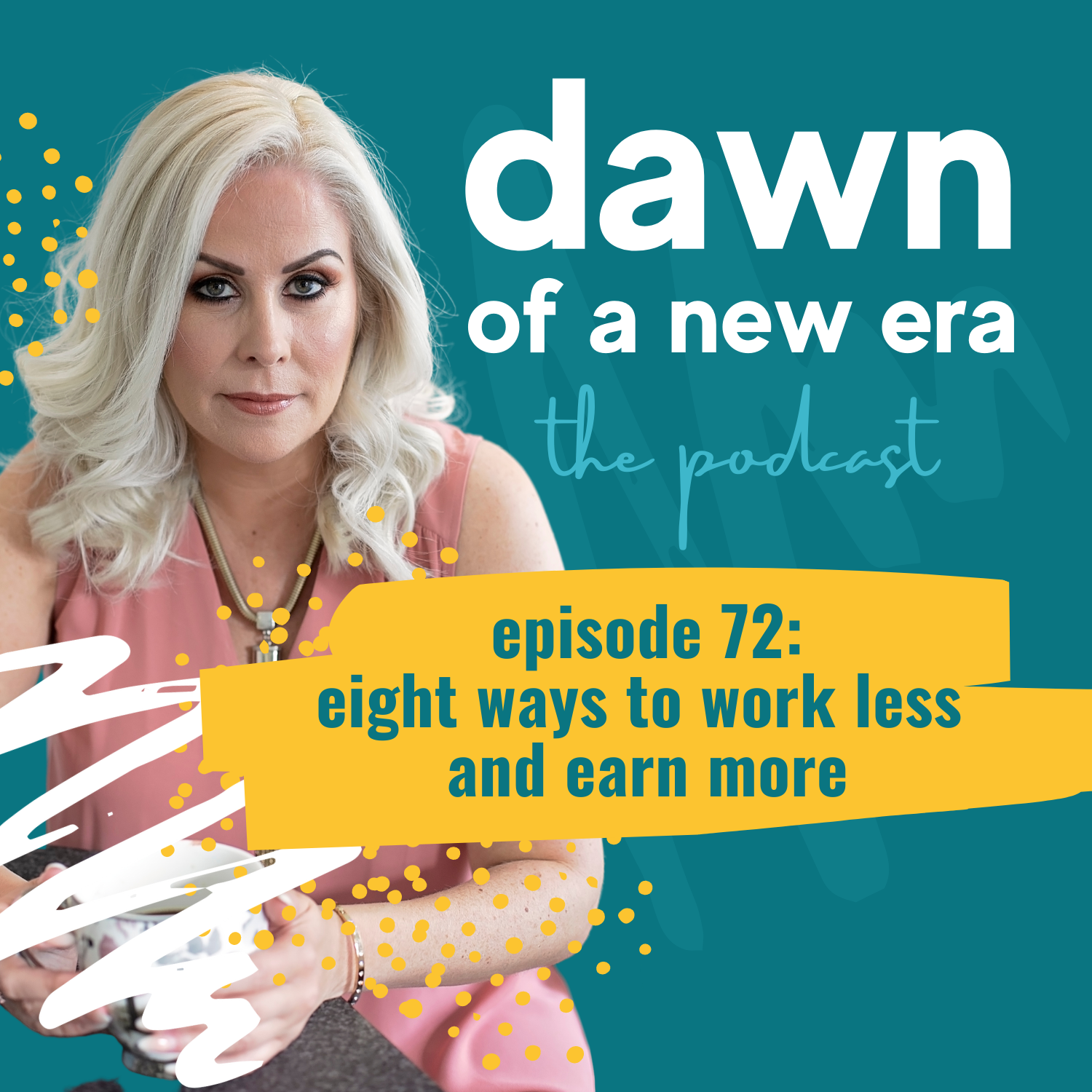
Listen to the Episode
Enjoying The Billionaire Brain®? Follow the show on Apple Podcasts so new episodes appear automatically.
Episode Highlights
Jump to a moment.
- 01:34Planning - hone in on your specific goals for the business
- 07:53Look at what your offer ladder is
- 09:55A sales-first mentality
- 14:09Habits
- 15:42Break the big tasks into manageable chunks
- 18:06Remember why you are doing this
- 20:06Simplify
- 22:46Be realistic with your time management
Full Episode Transcript
Read
This transcript was created automatically and may contain small errors.
Welcome to Dawn of a New Era, a business and marketing podcast with a difference, ranking in the top 5% globally for people who want to start, scale, and grow their own business. Dawn McGruer shares tips to improve marketing, motivation, and mindset, as well as her own real-life challenges and experiences as an entrepreneur. Guests include some of the world's most inspiring leaders too. So if you are an aspiring, established, or serial entrepreneur, this is your go-to podcast to fast-track results and rise to meet today's challenges and master the art of online influence and business success, and avoid common pitfalls along the way.
Never miss an episode and subscribe and listen at dawnmcgruer.com. Welcome to episode 72 of Dawn of a New Era with myself, Dawn McGruer, author and speaker in the world of digital and online marketing. Now, my passion is always about training, about guiding businesses and consulting on growth and how businesses can really focus in on maximising profit.
So in this podcast, I'm going to cover eight ways to work less and earn more. It's a biggie because I don't know one person who doesn't want to work less and earn more. So let's get started. The first one is about planning.
And when I talk about planning, I don't mean just sort of crafting out kind of, you know, roughly what you're going to do, but really, really hone in on looking at what the specific goals are for the business and be really careful that you're not just putting goals down that are not going to scale the business. Now, we often call these sort of vanity metrics or vanity goals because there's one thing focusing on planning to grow your audience. There's one thing planning on starting a podcast, writing a book, getting more web visitors, getting better email opens, all of those things, or building a list even on email. But we have to look at what's going to really move the needle, and it will be different for each person.
Now, I would not recommend if someone was really kind of trying to improve, say, cash flow and profit into the business, that every single day they just focus on growing their audience. Why? Well, because these things are nice, but having 10,000 people in your audience is one thing. But having the right people in your audience is a completely other.
But are those people going to move quickly? Are they going to be the quickest, fastest way of growing the business and pushing cash into it? Probably not. So it's about understanding when you're putting a plan together, what are the things specific to where you are at that you need to achieve, and then matching the activity to it.
So let's say I had a client who really wanted to kind of get, you know, three, four, five new clients on board, and it was critical to the sustainability and the cash flow of the business. What would we look at doing? Well, I know that some of the quickest, fastest ways of pushing cash into a business is through things like advertising. But then the business might not have the budget, okay?
And then if you were going to look at growing your audience, is this going to immediately turn that person into a customer? Maybe not. So what could we do? Well, we look at the things we have and we learn from it.
So we look at the proof and we look at the evidence in the business. So let's say you've got five clients. Where did the five clients come from? And could we do more of that?
Could we get the five clients that we have to refer a friend, a colleague, or could we get the people that we're working with to do some promotion as a referral partner? Could we indeed incentivize or create a campaign for those customers that we currently have for them to spend more, more frequently? So for me, planning has to be very specific, and it has to be based on something that we know about. And certainty is not always going to be true in business, but we have to go from sort of a level of success, and we have to kind of plan to maximize on what we know has worked before.
So I see a lot of plans where people go, right, you know, what I want to do is I want to increase our web visitors by 10% in the next 10 months or the 10 days, whatever it's going to be. But really, are these things going to be quick? And, you know, often when cash flow is a pressure, it's very hard for a business owner to think outside of that because it's kind of all-consuming. I meet so many clients who have got amazing businesses, fantastic products and services, and you may feel that you are one of those, but you are not reaping the results or getting the money into your business that you deserve.
And it becomes a bit of a vicious cycle because if you keep putting the plans together and you start using vanity goals rather than specific goals that are actually going to move the needle, then you will find it impossible to get past that point. So when we look at growing and scaling, the planning is the most crucial point. And you may think I'm labouring on this, but honestly, when I look at a business and I look at why it's not working, it is nine times out of ten the plan. The plan is not right.
The strategy is not in place. The goal does not obviously align to the tasks that are being carried out or the strategy, so it's just always going to fall apart. It's always just going to be slightly off. Now, you might be getting some really good results with something.
So if you're looking to kind of, you know, work less and earn more, you might be looking to really ramp things up. Now, it doesn't go to say that, you know, if you double your spend on something, you're going to get double the results back. It doesn't always work that way, but we can look at increasing spends and seeing what happens. So you could do this with advertising.
You could look at drawing people into different stages of your sales cycle or into different products and services. Another thing that I see when people are looking to work less and earn more is that they're going through this awful slog of trying to pull people in at the lower levels. Now, there's a kind of a fine line and a balancing point to where this can work. So, like, if you are a brand new business and you're thinking, right, I need to offer something at £27, but you have to be putting a bit of spend behind that to reach a new...
New audience. So it's one of those vicious circles again. How would you kind of crack it? Well, you need to be pulling people in at your medium to high ticket before you can kind of do that.
And for me, it would be better for someone to have one really solid client that maybe paid 50% of the expenses, and then maybe two lower clients. It's harder to pull in 100 new clients and then scrape past the bills. The effort level is huge. So for me, if I was working with a business that, you know, cash was the critical part, that, you know, they absolutely just wanted to focus on getting stable so that they had everything being paid, they were being paid themselves, then my suggestion would be to look at what your offer ladder is.
Now, I've done another podcast in one of my other podcasts, so the episode is actually in Digital Marketing Made Easy. Now, yes, I'm crazy. I have two podcasts, but it makes sense for my brands because I have the digital agency and the academy, Business Consort, that's totally focused towards digital marketing, and I teach a lot of online marketing strategies within there. Now, within this podcast, it's about marketing, it's about business, motivation, and mindset.
So we talk a lot more about how the entrepreneur, the marketer, the professional grows in terms of performance, as well as some techniques. Now, an offer ladder is when you look at the different offerings within the business, your different products and services. And let's just say, for argument's sake, you had a £27 thing, a £97 thing, and a £297 thing. If you try and sell the £297 thing versus the £297, and you don't have cash coming in, it's going to be difficult because you need cash flow to be able to get out to a bigger audience, especially when you're using ads to get the 27.
So you would be better having a balance of the 97 and the 297 to make sure everything is paid, everything is ticking along nicely, then move into the 27 because then that's more about brand awareness, bringing a larger number of people into your world. So I hope that makes sense. And if it is something you just think, Oh, I've just had an epiphany moment. Yeah, Dawn's right.
You know, I'm slogging away. I'm trying to pull in 100 people. Just think what you could do to pull in 10. And then think about what you could do to pull in one at the higher level.
So you could have, like, you know, 10 at 97 is a big difference to 10 at 27. You know, 10 at 297, again, is a vast difference. So you have to really think quite strategically and hone in on the task in hand, which brings me on to number two, which is a sales first mentality. And this is about nothing.
Thing really matters in business unless you've got money coming in, because the stress that I see people under, the panic, the worry, the sleepless nights, the relationships that are, you know, destroyed because of the immense pressure to pay bills, people, themselves. You know, it's just absolutely crazy. And it's something that, you know, I really, really kind of get upset about because we've all kind of been through the mill as an entrepreneur. There's no entrepreneur that I know who hasn't actually experienced that form of pressure in some way.
It's all relative, it's all different, but people generally have. So you know what I'm talking about. So when you think about sales first, it's about going into work thinking about nothing else. Like literally, if you've got a to-do list.
Stick it on the floor, put it to the side and just get a piece of paper and think, right, what would take this pain, this stress, this worry away? And think really strategically, and I keep saying this, think about how could you move current leads, current inquiries, current customers into a place whereby they would spend more money and they would benefit from your amazing value, your products and services. So this is about kind of honing in on thinking about, again, what's been working? What was the persuasive piece of information or thing that I said that got me my last client?
What was the key selling point? And really looking at this and thinking, do I have anyone right now who could refer? And do I have anyone now who would potentially spend more? So it's about really looking at your offerings and sense checking that they're right for your ideal client right now.
Because what I'm saying here is, is that consumer behaviour and markets change all the time. So sometimes your proposition, your products and services need a little bit of a tweak and maybe slightly different messaging because something is more relevant now. So, you know, we do on the academy, we have digital marketing qualifications and courses. We have to zhuzh these up all the time to make sure they're absolutely current.
I mean, the online marketing space, as you know, is ever evolving. So when you have a sales first mentality, you come in and look at what you have and how you can push those current contacts, those current leads, further into becoming a paying customer. And you operate at that level. So the first thing you do is look at that.
You don't pick up anything else. You know, it's so tempting to do the trivial work, isn't it? Like, you know, blitz through the to-do list, get ten things off of it. But do you know what?
Would you not prefer, or would your mind not be at more rest if you could just think, do you know what? Oh, I can't believe I just... You know, rang someone, had a meeting, got a discovery call booked in, did whatever it was going to be to move that person into paying customer. It could even be that you look at getting the money in that you're owed, you know, to take some pressure off.
And there's loads of different opportunities. You know, quite recently, and it's a sad fact really, that we've had to start, you know, using sort of debt collection agencies because people don't pay and things like that. You have to be strong as a business owner to think that, do you know what, we will go and do whatever we can for our clients, but then some people just don't pay, you know. And for a long while, I got really quite upset about this because I was thinking, you know, we've offered everything, we've reached out, you know, what's going on, you know, and you don't want to do anything because it feels bad and you think you put your belief system onto somebody else.
And I think this is where you go wrong. I've had to step away and think, well actually, you know, if that is the case, sometimes we'll have to do it. So sales first is about getting the money in your owed, looking at where the current money is coming from and where your leads are in your pipeline. So could you just do a couple of voice messages to these people and really operating at a point where that first 90 minutes of your day is just like sales, sales, sales, money, money, money, focus, focus, focus, okay?
So number three is about habits, okay? So this is something that I'm very, very into, and it's like a discipline that I have to live by. So my habits are, I have three things I have to do every day. Can't go past that, you know.
If you write a list of 92 things you want to do every day, I guarantee it won't happen. Three is the magic number for me. Three habits I do and three things have to happen. And these three habits are around how I work in my day.
So my first habit is obviously my sales first. Second habit is check in with my plan. Does it still align? Is it pushing towards, is it working?
Okay. And then my third habit brings me on to my next one, which is making sure that I respect my work time, okay? So I remove distraction. I make sure that, number four, when I respect my work time and my work zone, I'm absolutely in the moment.
So I prep, I sit down, I'm focused, and I work in 90-minute intervals. Then I have a break, and then that's it. For me, I know energetically that that is like my super time. It's the time that I'm just really focused in on what I'm doing.
So that time is dedicated to achieving my plan. It's dedicated to making sure my habits happen and my sales first, okay? So you can see how they're all interlinked, right? So it's so powerful when you put them together.
Now, number five is about breaking the big things, the big tasks, into manageable chunks, okay? So this is so, so true, okay? So when you think about why do we avoid a task, it's because it feels too big, okay? So I avoid things like the plague.
Just, you know, oh, if they feel, like, insurmountable and I just can't, like, think about how they're going to happen, I don't touch them. So what I do is I break them into mini chunks, and I look at when I have to have it done by, okay? So I set myself an end goal, and then I work back. And how I do that is I break down all the tasks onto just an A4 piece of paper, or I use this amazing stuff.
It's like whiteboard, and it's a bit like sort of cellophane. It just sort of attaches to the wall, doesn't stick, and you just kind of, like, pull it on and off. It doesn't mark the wall at all. So if I just map out everything I've got to do on that task, and then I start delegating first of all, okay?
So I think, right, take out all the tasks I can delegate, and then I look at what I've got left, and then I think, right, if I've got to have that all done by this date, when do I have to do them by, okay? So then I take that task and I break it down into like four or five just little mini chunks, and then I do them bit by bit, and I do the next thing. And then the next thing. So I chunk it down and, you know, by doing this, it's crazy.
Like we have at the moment quite a few campaigns where we've got a masterclass that we're putting out, which has got some amazing bonuses. Well, just sitting down and thinking what, you know, my ideal client really wanted from a bonus and what would just make this offer outstanding, that in itself was quite a big task. So I just kind of sat down in the afternoon and just kind of blitzed through that, and that was fine, you know, and then I went on to the next bit. So, you know, if you're doing things like sales pages and bonuses and emails and, oh my goodness, it just feels overwhelming.
So delegate first, then look at what you've got left, look at your timeline, and just take one of those items and then chunk it down into like four or five, even six mini tasks. Do those, tick it off, move to the next, break that down into five or six mini tasks onto the next thing, okay? And then you feel super accomplished. Honestly, when you just tick off these mini tasks, it feels so good, rather than just seeing the same thing on your to-do list each and every day.
Now, number six. Remember why you're doing this. Sounds mad, doesn't it? But how often are we plugging away, pushing away, doing stuff, and we're thinking, no idea why I'm actually doing this, right?
And this is about reconnecting with your sort of bigger why. So commercially, if you're thinking, do you know what? I really just want to go on holiday. I want to do this, this and this.
I get a piece of paper, or I use my magic board on the wall, and I plot out what I want to do. And these are the things that I'm doing it for, right? So I'm not just running a masterclass for the good of my health. I'm doing it because I want to help people.
I enjoy it. But yeah, I want to make some money, okay? So think about the bigger why. So what I do is I have a game board.
I'm going to share this with you over the coming months. My game board is, I love it. It looks like a child's drawing. It literally is a game board, like imagine like Snakes and Ladders.
I have little playing spaces, okay? And each playing space has a target in it. And for achieving that target, I get to buy something and I get to experience something. And I also have what we call a VIP bonus as well.
So if I achieve more than that target in the square, I get a super duper extra, okay? So things that I have, I have some gold healed Dior trainers that I need in my life, number one. And for an experience, I have going on a retreat in Barbados. Sounds nice, yeah?
So it gives me a very compelling reason to do these things because I know that there's a higher cause, there's a bigger dream. Yes, I want to leave a legacy. Yes, I want to empower people. Yes, I want to, you know, leave my mark on the world.
But yes, I want to enjoy my life too. So you shouldn't be ashamed of this. And doing a game board is a great way of just kind of bringing back that kind of inner child, the fun, and just making
It's nice again. And I think sometimes it just becomes a bit too staid, a bit too boring, okay? Number seven, simplify. So avoid the complexity.
As soon as you get into complex plans, tasks, things like that, what happens? Oh my goodness, you stop, and it's confusion. It's overwhelm. It's like, oh my God, halt, halt, halt, can't move forward, okay?
Your mind goes to absolute mush. You've no idea what you're doing, and you just walk away, and you feel frustrated, okay? Simplify. One thing at a time, right?
Just really focus on what's going to move the needle in your business. So one of the things that we want to do is we wanted to really focus on looking at an amount of money. So I'm going to say £50,000 in a month, and I wanted to look at how we could replace doing one thing, okay, switching the business around, and achieve that same money by doing something else. So we looked at the products and services and we thought, Aha, okay, actually, we could switch this and do this, and we could replace that income by doing X, Y and Z.
So sometimes you have to just step back and think, right, what's going to get me to the financial figure that's going to give me, like, calmness and inner peace quickly? How am I going to get that done? And you start to map out the process, okay? So you can't just think, you know, one day someone's going to come to you and go, Right, I'm going to pay you £10,000.
Fortunately, it doesn't work like that. Not always. It could do, but in realistic times, you know, we have to think about simplifying it. So how do you recruit clients now?
How could you push that forward? And what is the product that's going to move the needle? So again, it's kind of going back to this, like looking at your offerings and thinking, well, if you've got a 27, a 97 and a 297, and that's just not moving the needle, you know, you've been in business for a while, you've got some kind of proven track record, you've got some social proof, well, developing something that's maybe 997, okay? You know, and then that's getting one client in, you know, as a target, then two clients and so on and so on.
So you can start to see how you have to look at your offerings and then just go to the simplicity. What things are you going to do each day to maybe get that 997 client? Do you have an online course? Do you have a product or service you offer?
Is it a particular thing that people will buy? And really look at how you can use the people in your current world to get that client before you start thinking about the bigger picture. So again, it's just kind of like being strategic, looking at what you've got, simplifying it down and just thinking, if I just did this one thing and I could just get one more person, you know, how would I do it? So remove all the overwhelm, remove everything else that doesn't move the needle.
Take the to-do list, remember, discard it and put it to the side. Now, the last one: time. Being realistic. I am so guilty of this all the time.
What I do is I'm like— I'm like, oh yeah, so what I'll do is I'll just map out that, and then I'll record this, and I'll do this. And I'm like, how on earth did I think I was even going to do it? I did it the other week. I thought I was going to record ten modules.
I mean, craziness. I got through six, so I did pretty well. But then I was like, oh, I've not done those four, so I had to plug in the time. The next time, though, I was realistic, and I have to keep reminding myself, like, how long does a task take?
If it takes this long in my head, double it, right? Because normally in my head it's like, oh, it's a simple process. I'm not putting in any of the challenges or problems that I might have along the way. So sometimes I get ideas again when I'm creating, so then it takes me off kilter.
I start recording extra bits of modules, which is exactly what I did, because I was like, if I was a person doing this course, I'd love to do it this way. Oh, I'm just going to go off and do it. So for me, I have to have that creative time. So I have to kind of just clear a day and assume I've got half of it recording and half of it for faffing around, planning and being creative and for overcoming any obstacles.
So those are my eight ways. Now, this for me was one of my favorite topics I've ever, ever talked about on my podcast, because I think it is just so close to everyone's hearts. But I need to know what you guys are doing. So I would love, love, love, love for you to come and connect with me.
Come and see me on Instagram at Dawn McGruer. I'm trying to go onto Instagram and literally grow my channel. I've always been a lady on LinkedIn, and that is where I've grown my audience. You know, most people are influencers on one channel.
So I've got 30,000 connections on LinkedIn, probably about the same in followers. But now is the time for me to shine on Instagram. So I would love your help and support, and come on over and connect with me on any channel you'd like. And yeah, tell me how you're doing and if you've managed to move the needle using my eight ways to work less and earn more.
So join me on the next episode, and don't forget to subscribe to Dawn of a New Era. Take care. Speak soon. Thank you for listening to Dawn of a New Era podcast, and for your free checklist to find out how to boost your business for growth, profit, and success, and join our community.
Go to dawnmcgruer.com.
About The Billionaire Brain® Podcast
The Billionaire Brain® Podcast with Dawn McGruer, formerly Dawn of a New Era, explores the psychology, neuroscience and behaviours behind extraordinary success in business, wealth and life.
Through solo insights and conversations with founders, investors, millionaires, billionaires, authors and experts, Dawn explores how identity, thinking and behaviour shape what we create. New episodes are released regularly on Apple Podcasts, Spotify and YouTube.
- Episode · 72
- Published · 24 March 2022
- Run time · 25:16
- Host · Dawn McGruer
About Your Host
Dawn McGruer is an entrepreneur, 5× founder, award-winning keynote speaker and Forbes Books author of The Billionaire Brain®.
With more than 25 years in entrepreneurship, Dawn's work explores the intersection of founder psychology, neuroscience, wealth, identity and business growth.
Keep Listening