5 Secrets to a Successful Booked Out Business
What if being booked out is less about finding more clients and more about building a business model that works? When delivery gives way to another anxious search for sales, the answer is not necessarily more marketing, more offers or a longer to-do list. It starts with understanding what generates revenue, why clients choose you and which activities deserve your attention.
In this solo episode, business growth coach Dawn McGruer shares the five elements of her Growth Hacking Model: model, mapping, mindset, marketing and money. Drawing on her own experience of moving beyond feast and famine, she explores sustainable offers, specific client messaging, constructive feedback and the discipline of refining what is not yet working rather than starting again.
For female founders scaling their businesses, particularly those caught between client delivery and inconsistent cash flow, this is a practical invitation to reassess the foundations. You will come away with a clearer lens for separating activity from progress, prioritising revenue-driving decisions and creating space to lead as a CEO rather than staying in the weeds.
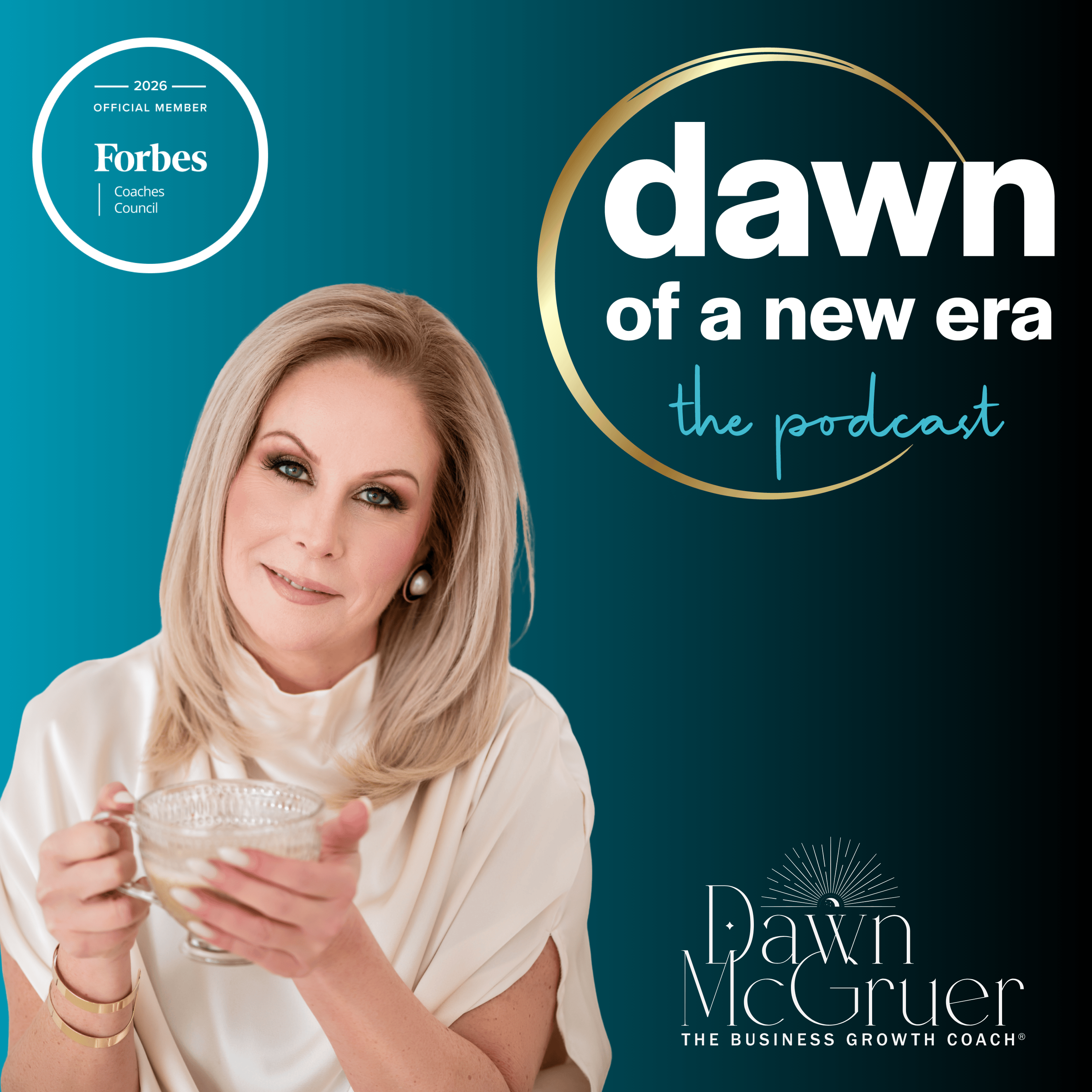
Listen to the Episode
Enjoying The Billionaire Brain®? Follow the show on Apple Podcasts so new episodes appear automatically.
Full Episode Transcript
Read
This transcript was created automatically and may contain small errors.
Welcome to episode 96 of Dawn of a New Era with myself, Dawn McGruer, the business growth coach, helping CEOs grow and scale. I cannot believe that we're nearly at the 100th episode, and to celebrate the fast approach of this big milestone, I'm going to be talking about one of my favorite topics today. And this episode is going to be all about my five secrets to a successful booked out business. This is a place that we all want to be, and there's no client I've ever spoken to who says that they don't want clients.
Now, the great point is, when I first started my business, I went through a lot of feast and famine, and you will probably relate to this if you have a business. And one of the things that is really hard is you find a bit of a struggle to kind of get past that point because when the pressure is real and you start getting financial pressure, the cash is not flowing, one minute everything's in flow and you're delivering and you're working with clients and they're getting epic results, you know, and the transformations are huge, and you're working in your zone of genius and it's an absolute delight every day. And then the whole mood shifts because you're offboarding that client because you've come to the end of the project, and now you have to find someone else to work with. So you go through a period, a lull, where the cash is not coming in, you're not flowing, and you're not glowing in your business because when we have pressure, we don't want to show up.
We don't want to be doing the things. Everything feels really difficult, and it's a place of hardship. We never make the best decisions either when we're operating from a place of fear, insecurity, but also a little bit of desperation because we're looking to pay ourselves, pay our staff, pay our teams, and make sure everything is working as it should. So to get things in sync and to make sure that you are booked out and that as a service-based business owner, or even someone who is selling from a shop or e-commerce, it doesn't really matter because the term booked out means that we have to be focusing on the numbers.
Are you generating your money goal? Are you hitting the right amount of revenue? Let's take it back a step because how did I get out of my feast and famine? Well, I'll tell you exactly how.
I had to really hone in on what was working and what wasn't. And I had to let go of the things that I kept pushing that weren't getting the results, and I had to become more dynamic in my approach. So I started to document all of the things that had brought an abundance of clients, that had helped me nurture them through to paying customers. I started to really get into their whole proposition appeal.
What I'm talking about here is what was the most persuasive thing, what was the compelling event that made them choose me, and how did I get them into my world in the first place? So when I look at how I got out of feast and famine, I started to chart the process, and I kind of developed what I would call a blueprint. And this started to get me into the zone of actually having an action plan. So I felt like I was gaining more control.
This then evolved into my signature framework, which is the Growth Hacking Model. Within the Growth Hacking Model, there are five key elements, five steps, and these are exactly the things that I have used within clients' businesses and within my business at 43, with multiple multi-six and seven-figure businesses. Believe you me, I am absolutely 100% confident that this works because I've honed it and honed it to a point where it is so sharp, so clear, that these are the things that absolutely have impact and move the needle in your business. So listen up.
Number one, and this is going to be the whole bedrock, the foundation of your business. And this is going to be kind of the, will it move, will it work, will you succeed, and will you achieve the goals in the way that you want, and will you exceed those and push your dreams further? So model is the number one. Now you might be thinking, well, what does that mean?
Well, it means the foundation, the business block, the model, how your business works. And what we're talking about here is having a model, a business model that's sustainable, that's profitable, and even perhaps sellable. What this is, is having something that is going to generate the amount of money that you need. I meet so many business owners, so many, probably over 80% of people that I start working with, even if they've had an element of success or quite large shifts in business.
I've worked with seven-figure business owners whose models are slightly off, okay? So this is not something that just Happens when you start, your model kind of evolves as you do. So the important thing to understand is when you have a model, you have to work out what it is you're going to sell. Is it feasible?
And if you're looking at trying to recruit 300 clients a month and sell them a £27 product, how much marketing, how much effort, how much money goes into that versus where you could be earning a million pounds in a year, and you could break that down to 40 clients a year, just three clients a month. Now that is pretty special. And when you start to look at the model and the terminology there, it starts to get exciting. Now, I'm not saying that everybody has to have a model that has a recurring revenue of around, say, £2,000, because that's pretty much what makes that seven figure.
But to get three clients a month feels easy. It feels free. It feels like I could have fun in my business. I could have freedom.
I could have flexibility, and I could have that financial growth as well, and certainty that my business is going to grow and be in flow. So make sure whatever you're selling, however many clients you need actually works, and that's your model. The second one is mapping, and this is crucial too. You hear so many people talking about creating your customer avatar, building the ideal client so that you understand exactly who they are.
That's not just waffle. That is absolute truth. It's the biggest part in business that I fix. And when I talk to people and say, Well, who do you sell to?
They say, Well, I sell to this industry or this type of business. You don't. You sell to a human being. So every time you show up in your marketing, your messaging, your proposition, it has to sing and align to that person.
I'm not a great fan of negative marketing. I don't really want to kind of hone in on the pains, the problems, and the challenges, and where you are right now and how desperate that might be. I want to look on the bright side, and I want to tell people what I can do for them. I want to show people the shift.
Shift that I can create for their business. And this is a game changer because this is what people buy into. People may have a pain, problem and challenge. That's fine.
But when people can see a path, a framework, a step-by-step, an action plan, a way of getting there, and they can start to see that happening, not just with the person who's offering it, but they can see client case studies. These are compelling, persuasive things. So when you map it out, you need to be super clear who it's for. And one thing that I would give you as my biggest piece of advice, please, please write this down.
When I niched down and I got super clear on exactly who I worked with and who I didn't, that's when I grew. The false belief is, is that when you work, or you say you work with everyone, I work with every business owner. You don't. It's too generic.
It's too broad. When you niche down, your whole tone and terminology changes. You start to really hone in and feel that person. You walk their shoes, and they start to really listen to what you've got to say because they're like, This is exactly me.
I'm not just a generic business owner, but I could be a course creator, a consultant, or a service-based business. You have to be specific and own it. Now, number three is mindset. We talk about this a lot.
If you don't have the motivation and your mindset is off, nothing is going to be in flow. You're not going to show up in your business in the right way. You're not going to be able to talk to your team in the right way. Nothing is going to be enjoyable, and it's going to be very difficult to move forward.
When you start to develop a growth mindset, this is when you shift. Even when you have issues in your business, challenges, you've got to be resilient and you've got to just take it on the chin and actually not keep falling back into victim mode. But instead of being like, Oh, woe is me, and the world is falling apart and this is happening, shift it. Step out of it, own it, walk past it.
And you might be thinking, Well, that's easy to say, Dawn, but we've all been there. I have had a business for 20 years. I've had so many pitfalls, so many pains, so many challenges, so many awful moments, so many times that I wanted to give up, so many times I've been in tears over things. But you have to just go.
How do I change this? What is one thing I can do today, right now, to shift me out of this pain? So you don't want to keep doing the same thing. If something didn't work, I hear it all the time.
People launch something, it fails. And guess what? I've been there too. I've had fails, but I've learned from them, and they've been the best things that have happened to my business because it's allowed me to learn, switch it up, optimize it, relaunch it, go again.
And then the third time I've done it, it's flown. And a classic example of this is I launched a course back in, I think it was like 2015, and I put it out, and I put so much into it, my heart, my soul, everything, and it just didn't quite fly. I had all of these...
Amazing targets and expectations, but it didn't hit it. So instead of going, Oh, I'm going to go and do something else, and that didn't sell, so that didn't work. I'll go and create something else over here. I went back to the drawing board, reworked it, switched my mindset.
And yeah, the marketing was off. The messaging was slightly off point. Switched it up, re-geared it, talked to people, got some feedback, relaunched it once again, made quarter of a million pounds. Third time, switched it up, got some feedback, re-optimized it, worked on it again, put it out, made seven figures.
Won an award for making a million in the training industry. That's just on one product. I didn't go and create 97 of them. I just looked at the one thing that I was so certain, so sure about, and changed that up.
This is a biggie because when you get your mindset into things, you start to react differently. Things change for you because if you wake up in the morning and you start going, Oh my goodness, I've got such a busy day, and you'll just get into that mood and that mindset, and it's wrong. You need to go, Well, look, I've got loads on today, but I've got some exciting things. I'm just going to smash through this.
I'm going to do this, and everything feels lighter and freer. So next time you feel yourself, like, dropping down into a bit of a negativity, pause, press stop, walk away, come back. And the great thing is, is everything can change. 24 hours is a whole new day.
So if today was bad, walk away. Show up the next day. Go again. And the thing is, you have to keep doing it.
And the thing is, is you don't want to be keep doing the same thing. You have to make shifts and be prepared to be dynamic. And if you believe in the product or service and it's not selling, there's a problem, right? There is a problem.
It doesn't mean the product doesn't work or the service doesn't work. There's a problem, and you need to show up, own it, and fix it. That's a bit of a harsh reality, but it's truth. If someone had really kind of nailed that into my head at 21, I'd have shifted quicker.
I wouldn't have just kept kind of plugging away, going, Oh, you know, if I can just get this sale, or I can just do this, and, Oh, I don't know why that's not worked, and I've done everything I can. Well, I may have felt like I did everything I can, but you can always review something and find a way that actually you go, No, I could have done that better, or maybe we could have done this, or maybe if we tried this, this, and this and added that on, it would work. But also having other people's feedback, that is a big part. And I think with the mastermind, what I see with clients is that when they join the success from your soul mastermind, it's not just the accountability, it's getting feedback from various people.
It's owning it and showing up and feeling held. It's having other people, like, you know, coaches, et cetera, to, like, look at your content, help you out with copy. For me, it's showing up and helping clients and coaching and the mentoring, the strategic side. Knowing that I've walked those shoes, I know that I can get results.
And I think this is the thing. When you look at your whole model, your mapping, and your mindset, and I think about the shift in my business, a lot of it has come from being part of groups and especially masterminds. They have been life-changing because having the support, having some feedback, and having someone to actually criticize is great. Because how many people out of your friends and family are going to go, Well, no, that doesn't really look that right, or they're just going to go, Oh, that landing page looks beautiful.
Okay, that's not the advice we need. We need someone to own it and say, Do you know, I don't really understand that, or That doesn't make sense. So make sure you have an accountability group. And this brings me on to number four, marketing.
And marketing is the bit that people just want to do so much of the same thing. People just keep posting and emailing, putting things on social. It's not getting engagement. They do more.
They do the same thing. There's an array of Canva graphics on there. No one's commenting. No one's liking, and no one's sharing it.
If no one is engaging, no one wants it, okay? So again, this might feel like a bit of a harsh truth, but it's true. If you are doing something and it's not getting results, think about the terminology. Storytelling for me is one of the biggest things, and I just love when I'm on social media and I'm sharing me, I'm being authentic, I'm showing the behind the scenes, I'm sharing the good, the bad, the ugly.
People are getting to know me and my personality, and that builds your tribe. You start to attract people that align with you, that gel with you, that flow with you, and the world feels like a lighter, brighter place. So you have to show up in a way that's authentic to you, in a way that's going to work, and you cannot afford just to be doing things just because someone else's. So walk away from the shiny objects.
Don't start writing books and podcasts unless you've got the foundations, unless you've got the financial stability in place. Do not focus on the things that don't matter. Revenue matters. And this brings me on to the last and final one, number five, money.
Make sure every single day you're looking at what you can save and what you can sell, what you can save, what you can sell. Take out subscriptions you're not using. Look at costs. Look at what you're actually putting in to deliver products and services.
Look at how much you're spending on marketing. Is there a better way? Is there something you're doing right now that's not bringing in the same results as something else that you could lose? Are you just focused on a massive digital to-do list, or are you actually looking at the things that are going to have impact?
Take out everything you can. Delegate, declutter, and make sure that you are showing up in a way that your actions are driving money into the business. And once you get into that consistent cash flow, and you've got cash flow coming in and it's guaranteed, you will have a brighter vision. You'll be able to step out the business more and operate more as a CEO.
You don't want to be stuck in the weeds just pushing at everything. You want to look at the bigger picture, reverse that back, and go. What would the ultimate look like? How would I get there?
What are the things I would need? What are the things I've done that have worked well and got me clients in the past? What are the things that didn't work? And be prepared to strip things out.
And honestly, if you took 80% out of your to-do list, no one would die. These are just churn, things that people do, and you feel really busy, and you feel like you're being productive, but they're not actually doing anything to grow your business. So I hope you enjoyed the harsh reality. I hope this gave you some food for thought.
But most importantly, I hope it changed your approach. Even just one subtle shift in mindset today can be the world of change. So to learn more about me and my podcast, you can go to DawnMcGruer.com.
You can check out ways to work with me. You can look at our amazing strategized and energized retreats. We've got them in Marrakech, we've got them in Tuscany, and we've got lots of exciting things coming up with the Success from Your Soul Mastermind as well. And of course, obviously, I work with clients one-to-one as well as group.
So there are also nuggets on there of free information. So make sure you binge the podcast. There are lots of lots of things I share that have really, really helped my clients and business owners. And these are the things that, you know, I've been through.
So if I can help somebody, I'm always grateful. So let me know if something has helped you, if something touched you out this podcast today or any of the other episodes. And if you love the podcast, don't forget to subscribe and rate and tell people with a review why to listen. So thanks so much for subscribing and listening and being part of this journey.
And we're nearly at the hundreds episode. So I will see you on the next one. Take care and have an amazing day. Thank you for listening to Dawn of a New Era podcast, and for your free checklist to find out how to boost your business for growth, profit and success, and join our community, go to DawnMcGruer.
com.
About The Billionaire Brain® Podcast
The Billionaire Brain® Podcast with Dawn McGruer, formerly Dawn of a New Era, explores the psychology, neuroscience and behaviours behind extraordinary success in business, wealth and life.
Through solo insights and conversations with founders, investors, millionaires, billionaires, authors and experts, Dawn explores how identity, thinking and behaviour shape what we create. New episodes are released regularly on Apple Podcasts, Spotify and YouTube.
- Episode · 96
- Published · 10 May 2023
- Run time · 18:04
- Host · Dawn McGruer
About Your Host
Dawn McGruer is an entrepreneur, 5× founder, award-winning keynote speaker and Forbes Books author of The Billionaire Brain®: Nine Steps to Think Better, Feel Richer and Live Happier, publishing June 2027.
With more than 25 years in entrepreneurship, Dawn's work explores the intersection of founder psychology, neuroscience, wealth, identity and business growth.
Keep Listening