How to Simplify Your Business & Make More Money
What if making more money starts with doing less, rather than creating another offer? When sales slow or a campaign falls short, adding more can distract you from the real issue: a proposition, message or strategy that needs refining, not replacing. Simplifying means identifying what is working, finding the bottlenecks and giving your strongest offer the attention it deserves.
In this solo episode, business growth coach Dawn McGruer explores the three foundations of a simpler business: the model, the marketing and the money. She explains why she prioritises high-ticket recurring offers, how to work backwards from income goals and where focused marketing can replace scattered activity. She also examines the role of clear positioning and purposeful follow-up in moving potential clients towards a purchase.
For founders and CEOs juggling multiple offers, inconsistent sales or relentless marketing demands, this episode offers a more focused way to approach growth. The shift is from adding activity under pressure to refining what you already have, prioritising revenue-generating work and creating more space for clear decisions.
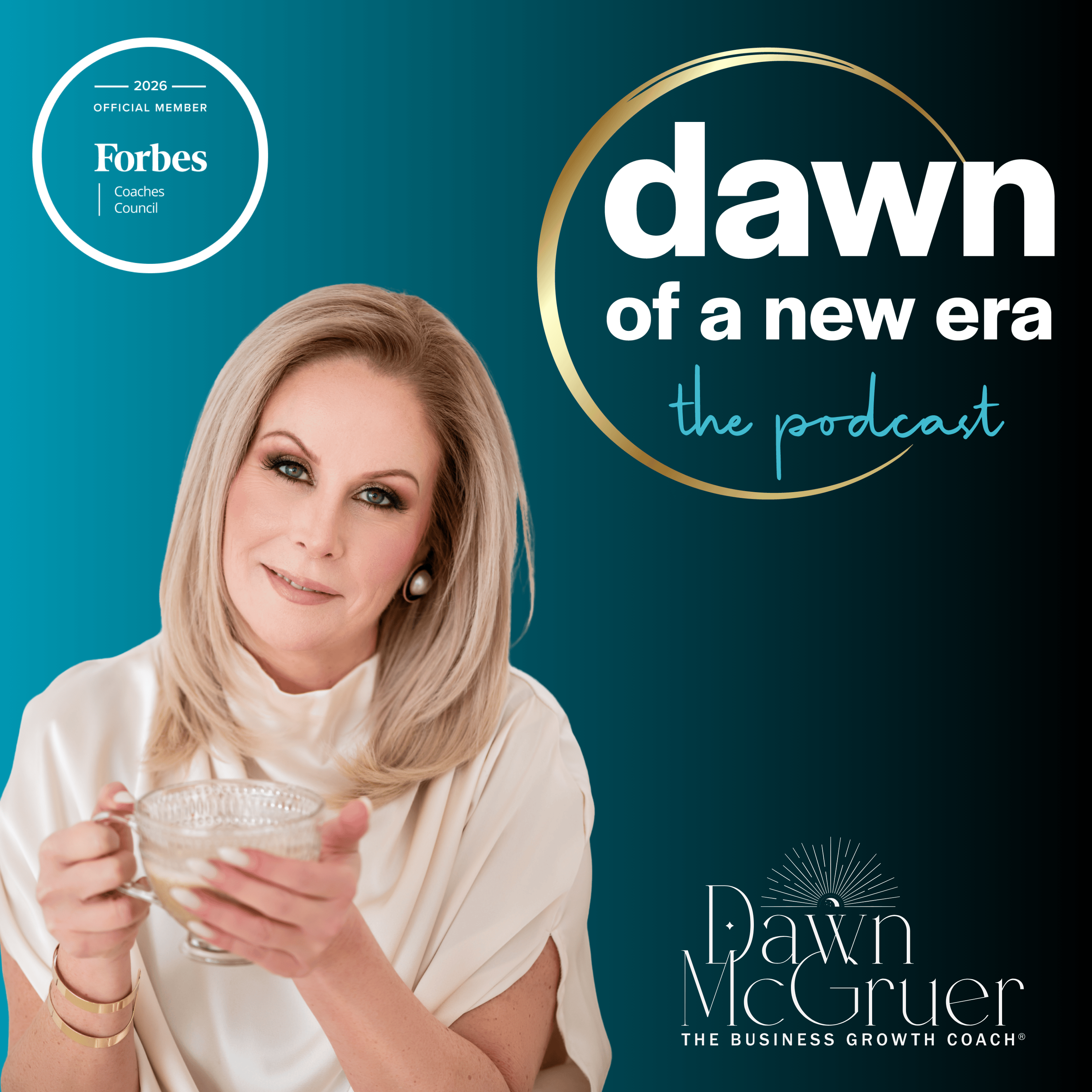
Listen to the Episode
Enjoying The Billionaire Brain®? Follow the show on Apple Podcasts so new episodes appear automatically.
Full Episode Transcript
Read
This transcript was created automatically and may contain small errors.
Welcome to episode 94 with myself, Dawn McGruer, the business growth coach, helping CEOs scale to £100,000 a month and more with less stress, more fun and freedom and flexibility. In this podcast, we're going to be talking about how simplifying your business can help you make more money. And this is something that we see a lot in business when people start to get strategic. But the stage that happens before this is people start to stress when maybe the money isn't coming in, or the strategy or advertising campaigns just isn't getting them visible enough to attract the right people and convert them into paying customers.
Generally what happens when CEOs get to a point, and we maybe have all experienced this to degrees before, where something just isn't getting traction, and we start to think, right, okay, what can we do? What can we add? What can we create to start getting results? This seems like a great idea at the time, but what happens is you move away from something that could potentially be an absolutely amazing success for your business because you feel that it's not working.
Really, what we should be doing is going back to the original thing, the product, the service, the campaign, and stripping it right back, looking at the messaging, looking at the marketing, looking at the positioning, really drilling down and looking at, are we niching in enough? Have we looked at the ideal client? And is the strategy we are actually using working? Are there elements that are getting traction?
So instead of actually building on top of it, we need to strip it all back down and start looking at what's getting results and where the bottleneck is happening. Quite often, when we've tested something and we've been really certain that it's going to fly and perhaps it doesn't get traction to the same degree that we wanted, it's because something is slightly off within the campaign. And often it just takes going back to reviewing the ideal client, niching in more, looking at the messaging and marketing, reworking it and testing. The case here is we have, in the past, launched courses that have ultimately become seven-figure courses.
But if we hadn't gone back and retested, relaunched it, we could have potentially got rid of something that is very valuable and lucrative for the business, something that's been amazing and created transformation and outstanding results for clients. So my advice here is, when we simplify your business, we definitely have the potential to make more money. So if something is not working as well as you wanted, or you're not getting the attraction of leads that are turning into paying profitable customers, then let's relook at the strategy. Let's relook at the proposition, and let's start tweaking and testing.
Because if you move away from that and start building something else, the same may happen, and you could end up with lots and lots of different products, a very, very incongruent sort of brand message out there. You're trying to market 17 different things rather than actually scaling back. I'm often asked, what is the ideal business model? Well, generally, if a business has three levels of services or products, etc.
, that they're offering, that tends to be the ideal. It's not the one size fits all, but, you know, generally speaking, that is the ideal. So what are the three things? Well, the first thing is high ticket, and the second thing is generally maybe like, you know, a course or a program, and then the third thing might be more of an ad hoc.
So how is this built? Well, when you create a business model, the biggest mistake I see is that someone will build three levels and they'll start marketing the lowest level entry product, generally something that's a one-off purchase. Now that's a lot of hard work. That is creating a huge amount of marketing effort within the business.
It means that you're going to have to be on pretty much every single day, pushing, pushing, pushing to get the level of clients that you need to become profitable. If you want to simplify things and switch things up and give yourself more time, more freedom, and ultimately have more fun in your business, then selling from the high ticket down has always been the best strategy. So when we think about business growth, we know that if you sell high ticket and it has recurring income, it's definitely going to be the easiest, fastest way to scale your business, and it's definitely going to have less stress. So 80% of your effort and 80% of your money and budget and marketing should be going on marketing your high ticket recurring product or service or program.
Once you get that into flow, that gives you the foundational cash flow, and that's often the bit that will break a business. If there's not enough cash coming in, then it becomes a struggle. The stress starts to mount, the overwhelm, the clarity is lost because there is so much to do. There is so much pushing and effort to try and get the business working and flowing that you can't step back and look at the bigger picture.
So think about your model and think about the actual amount of money. So this takes me on to the second thing you need into the business, and reverse it back and think about it not just monthly, not just weekly, not just daily, but hourly. Break down your hours. How much do you need to make each day to drive the business forward, to scale at the level you want to, that's not just going to hit the goals but exceed them and allow you to achieve your dreams.
And move your business forward in a way that feels comfortable. So this is about breaking down your sales, and it's the maths of selling. You have to understand what it is that you want to be generating as an income. You need to understand how you're going to price your product.
Are you actually showcasing the value of the product so that people are not so bothered about price? People are looking for transformation and results. And if you have an amazing product or service, and it's packaged in a proposition whereby the message and marketing is totally geared to the ideal client, then there is no reason that people shouldn't be buying it. So get the model right.
Think about where 80% of your effort is. Break down the money. Understand what your hourly income needs to be, and make sure that every single thing you are doing that day, before you work on anything else, is achieving that goal. Because believe you me, once you have the money coming in and the cash is flowing, you have more space, you have more freedom, and you have more clarity, and you have a better judgment on making decisions because you're not under pressure for making that money.
Do not get distracted by the shiny things. Walk away from everything that doesn't serve that goal. And this takes me on to number three: the marketing. You could market all day, every day for 24 hours a day.
But you might not get traction. You might not have impact. You need to work on the activities that are actually generating revenue, that are having impact in the business, that are moving the needle in your business, and only those things. Walk away from everything else.
There is plenty of time to come back to the shiny things. Don't get wrapped up in FOMO where someone's writing a book, someone's starting a podcast, someone's doing this. All of those things can come after you have the foundations built for your business. And the foundations for your business are the model, the marketing, and the money.
Once you have that nailed, you can build on that. If you start to build by creating things that aren't serving those goals, those things that aren't generating revenue, then you will have a very unstable business, a very unsustainable business that could potentially fall at any time. So you want to make sure that when you are creating a product or service and you are marketing that thing, that your sole activity is all roads lead to that one thing. Biggest mistake I see every single day is CEOs, entrepreneurs, business owners looking to just market their business.
You need to have a really clear strategy, a storyboard whereby you are showcasing what you do. You can't just build something and expect people to come. And often I see people saying, Well, you know, I've shared it on social media and no one took it up. It takes about 20 different posts on social media to even get traction across for the messaging of what you do.
Never mind getting people from that awareness stage to interest to desire. Interest is when people understand the benefits around your product or service. Now, 20 posts will probably get awareness, will get you halfway to that point of understanding what you do and why it's beneficial to them. But the next stage after that is then taking them from interest to desire, when they really, really want that thing.
When you start to get messages about what it is you're doing, when you start to generate inquiries. And the thing is here is that you can't just be putting random messages out. It has to be curated. It has to be thought out.
And this strategy of a storyboard and social media storytelling.
And positioning and seeding is all important to take them on that journey. And when you think about the things that really make a difference in business, it's generally, when you think about growth spurts, it's social media, it's email marketing, it's having a recurring income or multiple revenue streams. These are the things that scale businesses. And when I'm asked, what are my clients' successes?
It's when someone has really absolutely zoned in, focused in on that niche. They've niched down so they're so clear of who exactly they serve. They understand their ideal client to such a degree that they're almost walking their shoes day by day. And then when they are marketing, they are pushing one thing, one thing only.
Eighty percent of the effort is going to the high ticket. They are pushing people into a clear lead magnet that has steps. And again, when I see funnels that fail, it's because there's everything at the front end, everything at the top of funnel. You know, come and download this guide, come and do this quiz, but the nurture isn't there.
We know that if we nurture a client, ultimately they'll spend three to seven times more with our business, the more touch points they have with the brand. So understand the different stages of your funnel. As soon as they've done a quiz, as soon as they've downloaded something, as soon as they've watched a webinar, what is it you want them to do next? We have to speed the sales cycle up.
We can't pique their interest and then hope that in three days' time, when we send the next email, that we're going to have the same relevance, we're going to have that same excitement. We're not. When you get someone excited, you get that traction. That is your time, your opportunity to sell.
And we need to think of ways, hooks, that are really going to drive that forward. So my last and final point is that when you are marketing something, Think about what you are actually showcasing. So quite often, if I wanted someone to watch a video, let's say I had created a four-minute mini video, a case study about transformation that my product, my service creates my client. Well, an example here would be one of our most successful lead magnets is a video with the hook, which is how my client tripled her revenue in 90 days.
This showcases exactly what we did with the client, what her problem was, what her challenges were, all in four minutes. But there's nothing more persuasive than actually seeing the transformation outcome through working with me on my product or service. Think this through. And my last final tip would be get a piece of paper and start charting out your model, your marketing, and your money.
Start drilling this down. Start thinking about where your 80% of your effort should be and start decluttering and delegating everything else that doesn't take you on that journey, that doesn't serve that goal, and isn't going to help you scale and grow your business. So if you've enjoyed this podcast, don't forget to subscribe and to rate and review, and I will see you on next week's episode. Thank you for listening to Dawn of a New Era podcast, and for your free checklist to find out how to boost your business for growth, profit, and success, and join our community, go to dawnmcgruer.
com.
About The Billionaire Brain® Podcast
The Billionaire Brain® Podcast with Dawn McGruer, formerly Dawn of a New Era, explores the psychology, neuroscience and behaviours behind extraordinary success in business, wealth and life.
Through solo insights and conversations with founders, investors, millionaires, billionaires, authors and experts, Dawn explores how identity, thinking and behaviour shape what we create. New episodes are released regularly on Apple Podcasts, Spotify and YouTube.
- Episode · 94
- Published · 12 April 2023
- Run time · 13:42
- Host · Dawn McGruer
About Your Host
Dawn McGruer is an entrepreneur, 5× founder, award-winning keynote speaker and Forbes Books author of The Billionaire Brain®.
With more than 25 years in entrepreneurship, Dawn's work explores the intersection of founder psychology, neuroscience, wealth, identity and business growth.
Keep Listening